 listicle
Durable Minimalist Streetwear for Daily Wear: 2026 Review
Table of Contents
- Why Durable Minimalist Streetwear Earns Its Place in a Daily Rotation
- How We Evaluated: Fabric Weight, Construction, and Cost Per Wear
- High Quality Minimalist Aesthetic Tees: The 12:12 Celestial Line Reviewed
- The 777 Essential Oversized Fleece Hoodie: Heavyweight Layer for Cold Mornings
- How to Style Minimalist Streetwear for Everyday Wear
- Sustainable Streetwear Essentials: Repair, Care, and Long-Term Value
- Pricing, Pros and Cons, and Who Each Piece Is For
- Conclusion
- Frequently Asked Questions
Last Updated: September 10, 2026
Why Durable Minimalist Streetwear Earns Its Place in a Daily Rotation
Most wardrobes fail on durability, not on taste. The average American throws away roughly 70 pounds of clothing every year, according to EPA estimates on textile waste, and the pieces that survive longest are almost never the loudest ones. They are the graphic-free staples: heavyweight tees, boxy fleece, tailored trousers in a neutral color palette. That is the case for durable minimalist streetwear for daily wear, and it is why 12:12 built its Celestial line around heavyweight cotton, vintage-washed finishes, and clean lines instead of trend-chasing prints.
Below, we break down how we evaluate fabric weight and construction, review the 12:12 pieces that hold up to a daily rotation, and show you how to style minimalist streetwear so it works for more than a season.
How We Evaluated: Fabric Weight, Construction, and Cost Per Wear
Cost per wear is the only pricing metric that matters for a daily rotation. Divide the price by the number of times you realistically wear a piece; a $33 tee worn twice a week for a year costs about $0.32 per wear, beating a $15 fast-fashion tee worn six times before it pills or fades.
We scored every piece on four criteria:
- Fabric weight and hand feel, measured in ounces per square yard (oz/yd²)
- Construction details: dropped shoulders, reinforced necklines, print durability
- Versatility across seasons and layering potential
- Care requirements and how the garment ages after repeated washing
A common mistake is judging tees by feel in the store rather than by fabric weight on the label. A soft, thin cotton tee feels great on day one and looks exhausted by month three, while heavyweight fleece and vintage-washed cotton hold their shape longer. Longevity starts with the spec sheet, not the mirror.
High Quality Minimalist Aesthetic Tees: The 12:12 Celestial Line Reviewed
The 12:12 Celestial collection is the strongest answer we found to the question of high quality minimalist aesthetic tees that double as wearable affirmations. Every tee is cut with a relaxed oversized silhouette, dropped shoulder, and crew neck, then vintage-washed to feel broken-in from the first wear.
The 11:11, 222, and 777 Vintage Washed Tees
Each tee carries one angel number and retails at $33.33:
- 11:11 Oversized T-Shirt: the manifestation portal number, with subtle moon and star accents. Best for a daily reminder to make the wish.
- 222 Oversized T-Shirt: 100% cotton, vintage-washed, tied to trust and divine timing. The most versatile for layering under a hoodie.
- 777 Oversized T-Shirt: the "jackpot" number, for anyone riding a winning streak and wanting to wear the gratitude.
All three share the same care routine: machine wash cold, wash inside-out, tumble dry low. Free shipping applies on orders over $50, which covers two tees in a single order.

The 777 Essential Oversized Fleece Hoodie: Heavyweight Layer for Cold Mornings
Heavyweight fleece is the difference between a hoodie you wear twice and one you wear every week. The 777 Essential Oversized Boxy Fit Fleece Hoodie ($66.66) uses a 10.2 oz/yd² blend of 53% polyester, 42% cotton, and 5% other fibers, firmly heavyweight fleece territory. Its oversized boxy fit and cropped length give progressive silhouettes without straying from the minimalist aesthetic.

Where it earns its place: morning meditation sessions, manifesting walks, and layering over any of the Celestial tees. Where it falls short: the cropped cut runs short on taller frames, so size up if you want full hip coverage. Care is straightforward: machine wash cold, tumble dry low, and iron on low while avoiding the print area.
How to Style Minimalist Streetwear for Everyday Wear
Most styling guides stop at "keep it neutral and vary your proportions." That advice is correct but useless alone, because the same oversized tee reads completely differently on a 5'6" frame than a 6'2" one. The real skill is matching silhouette to body type so the minimalist look stays intentional.
Here is the rotation that works five days a week, followed by how to adjust it for your build:
- Base layer: a vintage-washed oversized tee in your number of choice
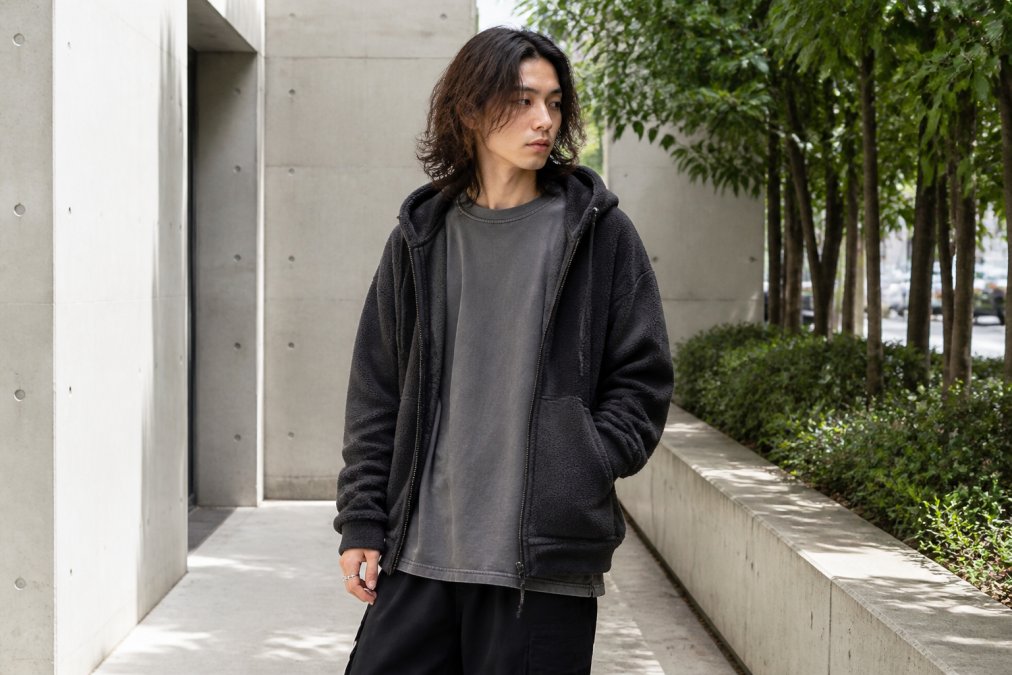
- Mid layer: the 777 fleece hoodie on cold mornings, worn open
- Bottom: tailored trousers or relaxed denim in a matching neutral
- Footwear: clean, low-profile sneakers in white or black
- Outer layer: an unstructured overshirt or coach jacket when temperatures drop
Styling by Body Type
Shorter frames (under 5'7"). A cropped hoodie and an oversized tee can swallow you if both are long. Keep the tee hem at or just below the hip bone, and choose a cropped fleece so the waistline stays visible. A monochrome column, same color top and bottom, adds vertical line without heels. Avoid wide-leg trousers that pool at the ankle; a straight or slightly tapered cut keeps the leg reading long.
Taller frames (over 6'0"). The cropped 777 fleece runs short, so size up for hip coverage or layer it over a longer tee extending two to three inches below the hoodie hem. This stacked-hem look is deliberate, not sloppy, and it is the easiest fix for tall wearers. Full-length straight-leg trousers balance the longer torso.
Broader shoulders or athletic builds. Dropped-shoulder tees are your friend because the seam sits off the shoulder and softens the line rather than pulling across the chest. Pair with a slimmer trouser to avoid a top-heavy silhouette. Skip double-oversized combinations, a boxy tee under a boxy hoodie adds bulk where you do not want it.
Slimmer builds. You can carry two oversized pieces at once, which most people cannot. Layer the oversized tee under the boxy fleece and let both read full, then add a chunkier sneaker to give the lower half visual weight.
The Proportion Rule That Actually Matters
Oversized fits need contrast to look intentional. Pair a boxy hoodie with a slimmer trouser, or an oversized tee with a straight-leg cut. Two oversized pieces at once read as shapeless on most builds, the exception is the slimmer frame noted above. The goal is one voluminous piece per outfit, with everything else following a cleaner line.
Color Palettes That Do the Work for You
A monochromatic base of black, bone, or washed grey does most of the styling for you, because it removes the decision of what matches. Build a three-color capsule, one dark neutral, one light neutral, one mid-tone, and every piece pairs with every other. The angel number graphic then becomes the only focal point you need, which is exactly how minimalist streetwear is supposed to function: the fit and fabric carry the look, and the detail is a bonus rather than the whole point.
Sustainable Streetwear Essentials: Repair, Care, and Long-Term Value
Sustainability in streetwear is usually sold as a label. In practice, it is a behavior: how long a garment stays in rotation. Correct care and basic repair do most of the work, and both are cheaper than replacing a piece.
The Fabric Science Behind "Durable"
Durability is not a vibe; it is a set of measurable specs. The two numbers that matter most on a spec sheet are fabric weight and fiber content.
Fabric weight, measured in ounces per square yard (oz/yd²). Standard cotton tees sit around 4.5-5.5 oz/yd²; heavyweight tees start around 6.5 oz/yd² and climb past 8. The 777 fleece hoodie at 10.2 oz/yd² sits firmly in heavyweight fleece territory, which is why it holds its shape through repeated washing where a lighter hoodie would pill and sag. Heavier fabric resists daily wear simply because there is more fiber to absorb it.
Fiber content and blend behavior. The 777 fleece blend, 53% polyester, 42% cotton, 5% other fibers, is a deliberate trade-off. Cotton brings breathability and a soft hand feel; polyester brings abrasion resistance and shape retention. A 100% cotton fleece stretches at the cuffs and hem over time, while a high-polyester fleece holds shape but can pill. The blend splits the difference, which is why most durable heavyweight fleece uses a similar ratio.
Vintage-washed cotton. The Celestial tees use a vintage wash that pre-shrinks and softens the fabric before it reaches you, meaning less shrinkage after your first wash and a broken-in feel from day one. But the fabric has already been through mechanical stress, so heat is the enemy from here on. Cold water and air drying preserve what the wash created.
A Repair Guide for the Three Failures That Actually Happen
Most garments do not die from dramatic damage. They die from three small failures, each fixable in under fifteen minutes.
1. A stretched or wavy neckline. The most common tee failure. Turn the tee inside out and run a running stitch along the inside of the collar ribbing, pulling gently to draw the fabric back to shape, with a backstitch at each end to lock it. This buys another year of wear on a tee that would otherwise become sleepwear.
2. Small holes and seam pulls. A five-minute hand stitch with matching thread closes a hole before it spreads. For knits, use a blunt needle so you push between fibers rather than cutting them. A ladder stitch hides the repair almost completely on a flat seam.
3. Faded or cracked prints. Fabric markers in a matching tone can lift a faded graphic back to legibility. For cracked prints, a thin layer of fabric medium applied with a small brush and heat-set with an iron (on low, from the inside) can re-bond the ink. It is a stopgap, not a restoration, but it extends a graphic tee's life by months.
Care Rules That Add Years
Wash less often. Spot-clean when you can, wash cold when you must, and turn prints inside-out to protect the graphic from abrasion in the drum. Skip fabric softener, it coats fibers and reduces breathability (PubMed). Dry flat or hang when possible; the dryer's heat and tumbling are the biggest contributors to fiber breakdown.
The Cost-Per-Wear Math
Cost per wear is the only pricing metric that matters for a daily rotation. Divide the price by the number of times you realistically wear a piece.
A $33.33 tee worn twice a week for two years lands near $0.16 per wear. A $15 tee worn ten times before it fades costs $1.50 per wear, roughly nine times more. Durable construction is not a premium; it is the cheaper option over time, and the math only improves the longer you keep the piece in rotation.
Pricing, Pros and Cons, and Who Each Piece Is For
| Piece | Price | Fabric | Best For | Watch Out For |
|---|---|---|---|---|
| 11:11 Oversized Tee | $33.33 | Vintage-washed cotton | Manifestation-focused daily wear | Oversized fit runs roomy |
| 222 Oversized Tee | $33.33 | 100% cotton, vintage-washed | Layering under hoodies | Wash inside-out to protect print |
| 777 Oversized Tee | $33.33 | Vintage-washed cotton | Anyone in a "lucky streak" season | Limited colorways |
| 777 Fleece Hoodie | $66.66 | 10.2 oz/yd² fleece blend | Cold mornings, meditation, layering | Cropped length on tall frames |
| 444 Performance Tank | $22.22 | Moisture-wicking blend | Yoga, gym, high-intensity training | Athletic fit, not oversized |
Pros across the line: heavyweight fabrics, made-to-order production, cohesive minimalist aesthetic, free shipping over $50, and a design language that stays wearable past a single trend cycle.

Cons across the line: the oversized cuts are intentionally roomy, so size down if you prefer a fitted look; and the angel number graphics are the entire design language, which will not suit anyone who wants completely graphic-free pieces.
Conclusion
Building a daily rotation that lasts is harder than it sounds, because most clothing is designed to look good on a hanger rather than survive a hundred washes. 12:12 solves that with heavyweight fleece, vintage-washed cotton tees, and a minimalist aesthetic built around wearable affirmations instead of seasonal graphics. If you want pieces that hold their shape, hold their meaning, and earn their cost per wear, start with the 777 Essential Oversized Boxy Fit Fleece Hoodie and a Celestial tee in the number that speaks to you. Shop the Collection and build a rotation you will still be wearing next year.
Frequently Asked Questions
What defines durable minimalist streetwear for daily wear?
Durable minimalist streetwear for daily wear combines neutral colors, clean lines, and graphic-free or subtly detailed pieces with construction that survives repeated washing. Fabric weight matters: a 10.2 oz/yd² fleece hoodie holds its shape far longer than thin 6 oz blends. Look for reinforced seams, stable necklines, and prints that resist cracking. The goal is a small set of pieces you can wear multiple times a week without visible wear.
What fabrics hold up best in long-lasting streetwear?
Heavyweight cotton and cotton-rich blends outlast thin synthetics in daily rotation. The 222 and 777 Celestial tees use 100% vintage-washed cotton, which softens with each wash instead of pilling. The 777 Essential Hoodie uses a 53% polyester, 42% cotton, 5% other fibers blend at 10.2 oz/yd², giving it warmth and shape retention. Higher fabric weight and dense knit structure are the two strongest predictors of textile longevity.
How do I build a minimalist streetwear capsule wardrobe?
Start with four to six neutral tops (tees and tanks), two hoodies or mid-layers, and two pairs of tailored trousers or relaxed denim. Stick to a neutral color palette so everything mixes. A white, black, or washed-grey tee pairs with nearly any bottom. Add one statement piece, like an angel number tee, to carry personal meaning. A tight capsule of 8-12 pieces covers a full week of daily wear without decision fatigue.
Is minimalist streetwear worth the investment for daily wear?
Cost per wear answers this better than sticker price. A $33.33 tee worn twice a week for two years costs about $0.32 per wear. A $12 fast-fashion tee worn 20 times before fading costs $0.60 per wear. Higher upfront prices on durable construction, organic cotton, and quality craftsmanship usually win over time. The 12:12 line sits at a fair price for the fabric weight and production standard.
How should I care for durable minimalist streetwear to make it last?
Wash cold, inside out, and tumble dry low to protect prints and fibers. Skip fabric softener, which coats cotton and reduces breathability. Air-dry heavyweight fleece when you can; heat is the main cause of shrinkage and pilling. Store folded rather than hung for knits to prevent shoulder stretch. Following these garment care steps can extend the life of a daily rotation piece well past the two-year mark.