 how-to
How to Practice Mindfulness Daily: A 2026 Guide
Table of Contents
- What Is Mindfulness and Why It Matters
- Mindfulness Exercises for Beginners
- How to Practice Mindfulness at Work
- Daily Mindfulness Routine Examples
- Benefits of Consistent Mindfulness Practice
- Overcoming Common Barriers to Daily Practice
- How to Practice Mindfulness Daily With Intention
- Frequently Asked Questions
Last Updated: September 1, 2026
What Is Mindfulness and Why It Matters
Mindfulness is the practice of bringing your full attention to the present moment without judgment. At 12:12, we believe that learning how to practice mindfulness daily is foundational to living with intention and spiritual alignment. Most people spend their days caught between regret about the past and anxiety about the future. Mindfulness pulls you back to now, where actual life happens.
The essence of mindfulness rests on two pillars: present moment awareness and non-judgmental observation. You don't need special equipment, a retreat, or years of training. You can practice mindfulness daily in the spaces you already occupy, your home, your commute, your workplace.
Mindfulness Exercises for Beginners
If you're new to mindfulness, starting with simple exercises removes the mystery and builds momentum.
Conscious Breathing Exercise
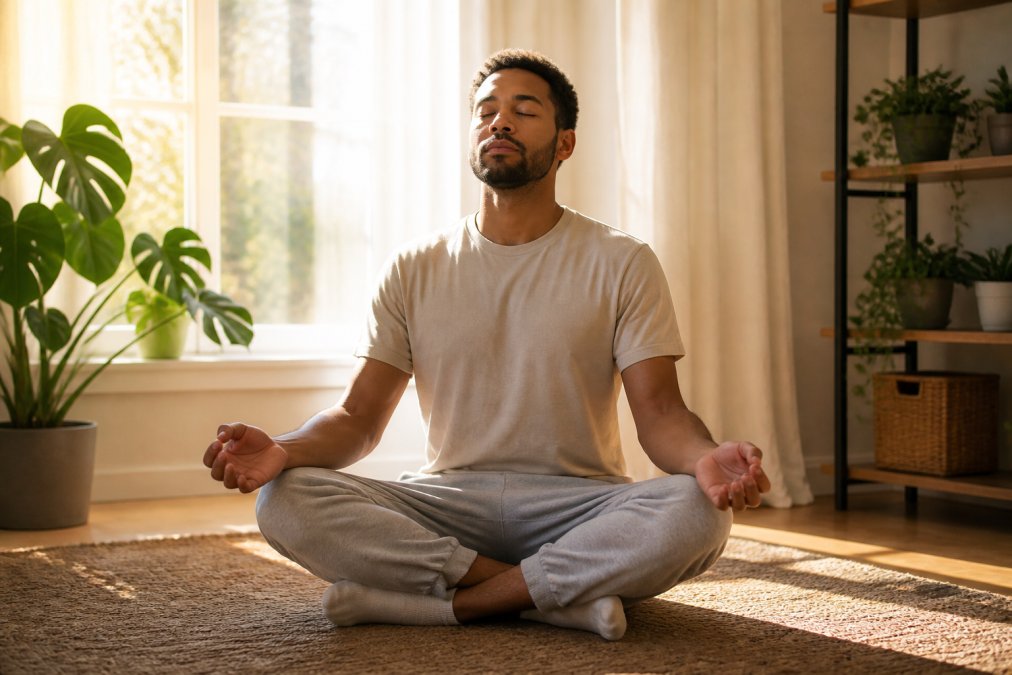
Conscious breathing is where most beginners start because it's immediate and portable. Your breath is always with you, it's the most reliable anchor for present moment awareness.
Here's how to practice this foundational technique:
- Find a comfortable seated position. Your spine should be upright but not rigid.
- Close your eyes or soften your gaze.
- Breathe naturally through your nose. Simply notice the sensation of air entering and leaving.
- Count your breaths silently. Inhale (count "one"), exhale (count "two"). Continue up to ten, then restart.
- When your mind wanders, gently return to counting. This is the entire practice.
- Continue for 5-10 minutes. Set a timer so you're not watching the clock.
When you notice your mind wandering and return to your breath without frustration, you're training your attention span and building cognitive focus (peer-reviewed research).
Body Scan Meditation
A body scan teaches sensory awareness and helps you notice tension you didn't know you were holding. This practice is especially valuable if you spend hours at a desk.
Follow these steps:
- Lie flat on your back or sit comfortably.
- Start at the top of your head. Bring your attention to your scalp, forehead, and temples. Don't try to change anything, just notice.
- Slowly move your attention downward. Eyes, nose, jaw, throat, shoulders, arms, hands, chest, stomach, lower back, hips, thighs, knees, calves, feet.
- Spend 10-15 seconds on each area. Notice temperature, tension, tingling, or numbness.
- If you find tension, breathe into that area. Often, tension releases simply through acknowledgment.
- Complete the scan from head to toe. The entire practice typically takes 15-20 minutes.
Body scans build the foundation for observing thoughts without judgment. When you practice noticing physical sensations without trying to fix them, you're training the same skill you'll use with emotions and thoughts.
Walking Meditation
Walking meditation brings mindfulness into motion. If sitting still feels impossible, this practice proves that meditation doesn't require stillness, it requires attention.
Here's how to practice:
- Choose a quiet path. Indoors or outdoors, minimal distractions work best.
- Walk slowly, about half your normal pace. This slowness gives your mind time to notice.
- Focus on the physical sensation of walking. Feel your heel striking the ground, weight shifting, toes pushing off.
- Coordinate your breath with your steps if it feels natural. Inhale for three steps, exhale for three steps.
- When your mind wanders, gently return to the sensation of walking.
- Walk for 10-20 minutes. Slower is better than longer.
Walking meditation is powerful because it integrates mindfulness into something your body already does. Many people sustain attention longer while walking than while sitting.
How to Practice Mindfulness at Work
The workplace is where mindfulness becomes genuinely valuable. Work environments are designed to pull your attention in multiple directions: emails, meetings, deadlines, interpersonal dynamics. Practicing mindfulness daily at work interrupts this fragmentation and helps you move with intention rather than reaction.

Most high-stress professional environments reward reactivity. Mindfulness creates space between stimulus and response, and that space is where your actual power lives.
Here's how to integrate mindfulness into your workday:
Before work begins: Take five minutes before opening your email or calendar. Sit at your desk and practice conscious breathing. This sets your nervous system to "present and grounded."
Between meetings: Use transition time for a one-minute grounding practice. Feel your feet on the floor, notice three sounds you can hear, feel your hands on the desk.
During difficult conversations: When tension rises, pause and take one conscious breath before responding. This single pause often prevents reactive decisions you'd later regret.
At lunch: Eat away from your desk. Eat slowly and notice flavors, textures, and sensations. This informal meditation improves digestion and satisfaction.
Before leaving: Spend two minutes acknowledging what you accomplished, what you learned, and what you're letting go of until tomorrow. This prevents work stress from bleeding into personal time.
Daily Mindfulness Routine Examples
The most sustainable way to practice mindfulness daily is to build it into your existing routine rather than adding it as another task.
Here's what a realistic daily mindfulness routine looks like:
Morning (10-15 minutes total):
- Upon waking, before checking your phone: 5 minutes of conscious breathing
- During your shower: 5 minutes of sensory awareness
- With your first beverage: 5 minutes of mindful consumption
Midday (5-10 minutes total):
- One conscious breathing break between tasks
- One walking meditation
Evening (10-15 minutes total):
- A body scan meditation before bed (15 minutes) or a walking meditation after dinner (10 minutes)
This routine totals 25-40 minutes daily, distributed across your day so it never feels like a burden. Many people find they crave the practice because they notice how much clearer and calmer they feel.
Morning Intention Setting
How you start your day determines how you move through it. Morning intention setting is where mindfulness meets manifestation, you're directing your presence toward what matters.
Here's a structured morning intention practice:
- Sit quietly for 2-3 minutes with your eyes closed. Let your mind settle.
- Ask yourself: "What's one thing I want to cultivate today?" Wait for an answer that feels true.
- Visualize yourself embodying that quality. See yourself moving through your day with this intention active.
- Repeat your intention as a simple phrase. "I move with clarity." "I respond with kindness." Say it 3-5 times.
- Open your eyes and carry this intention into your day. When you notice yourself forgetting it, gently return.
Morning intention setting works because it primes your brain to notice opportunities to live that intention. Many people find that wearing intentional apparel, like a spiritual tee with meaningful symbolism, reinforces their morning intention throughout the day. At 12:12, our collection of angel number and celestial apparel serves as a wearable reminder of your intention.
Mindfulness During Daily Chores
One of the most underutilized opportunities for mindfulness is the time you spend on routine tasks. Washing dishes, folding laundry, cleaning, or commuting are perfect for informal meditation because they're already part of your schedule.
The practice is simple: bring full sensory awareness to the task. Feel the water temperature while washing dishes, notice the texture of fabric while folding laundry, move slowly and deliberately while cleaning. When your mind wanders, gently return to the sensation.
The power of informal meditation is that it doesn't require extra time. You're already doing these tasks. By bringing mindfulness to them, you're getting a daily meditation practice while your regular work still gets done.
Benefits of Consistent Mindfulness Practice
The benefits of practicing mindfulness daily extend far beyond stress relief. Consistent practice rewires how your brain processes information and responds to challenges.
Mental clarity improves noticeably. When you practice mindfulness daily, you're training your attention span and ability to focus. Your mind becomes less reactive to every notification, thought, or emotion that arises.
Emotional regulation strengthens. Mindfulness teaches you to observe emotions without being controlled by them. You notice anger arising without immediately acting on it. This creates space for choice in how you respond.
Your nervous system learns to downregulate. Chronic stress keeps your body in a state of low-level activation. When you practice mindfulness daily, your parasympathetic nervous system becomes more active (the NIH). Your heart rate variability may improve, your blood pressure may normalize, and your sleep quality often deepens (peer-reviewed research).
Relationships improve. When you're present with people instead of lost in your own thoughts, they feel genuinely heard. When you respond from awareness instead of reactivity, conflicts resolve more easily.
Self-awareness deepens. Consistent mindfulness practice reveals patterns you couldn't see before. You notice how certain situations trigger specific reactions and see your habitual thought patterns. This awareness is the first step toward change.
Overcoming Common Barriers to Daily Practice
The biggest barrier to practicing mindfulness daily isn't lack of desire, it's the gap between intention and consistency.
"I can't stop my mind from thinking." Your mind is supposed to think. Mindfulness isn't about achieving a blank mind. It's about noticing when your mind has wandered and gently returning your attention.
"I don't have time." Most people have 5-10 minutes somewhere in their day. Start with three minutes. Three minutes daily is more valuable than 30 minutes once a month. Consistency matters more than duration.
"I fall asleep when I meditate." You probably need more sleep. Get more rest, then try meditating at a different time of day or in a seated position rather than lying down.
"I don't feel like it's working." Mindfulness benefits are subtle at first. Expect gradual, not dramatic, change.
"My mind races too much to meditate." A racing mind is ideal for mindfulness practice because you have so much material to work with. Each time you notice your mind racing and return to your breath, that's the practice working.
"I feel restless sitting still." Try walking meditation or body scans instead. Mindfulness doesn't require stillness, it requires attention.
How to Practice Mindfulness Daily With Intention
The deepest level of mindfulness practice is integrating it with conscious intention. This is where mindfulness moves beyond stress relief and becomes a spiritual practice, a way of aligning your daily actions with your values and your highest self.
Intention-driven mindfulness starts with clarity about what you're actually practicing toward. Are you practicing to reduce anxiety? To improve focus? To deepen your spiritual connection? To live more authentically? Your reason shapes your practice.
Here's how to build intention into your daily mindfulness:
Define your why. Get clear on why you're doing this. Write it down: "I practice mindfulness daily to stay connected to my inner wisdom" or "I practice to respond to challenges with clarity instead of reactivity."
Choose practices that align with your intention. If your intention is spiritual connection, body scan meditation might resonate more than conscious breathing. Let your intention guide your method.
Carry your intention into daily life. The real practice isn't what happens on the meditation cushion, it's what happens when you're faced with a difficult moment and you remember to pause.
Notice alignment. As you practice mindfulness daily, you'll start noticing when your choices align with your values and when they don't. This awareness is the fruit of consistent practice.
Many people find that intentional living becomes easier when they have physical reminders of their commitment. A piece of spiritual apparel from 12:12, like our 11:11 Angel Number Loose Tank Top or 777 Essential Oversized Boxy Fit Fleece Hoodie, serves as a wearable affirmation. When you wear these pieces, you're literally clothing yourself in your intention.


The integration of mindfulness with intention is where spiritual practice becomes real. You're not just meditating to feel calmer, you're cultivating presence as a way of showing up as your highest self.
The gap between wanting to practice mindfulness daily and actually building it into your life is real. Start with one practice this week. Choose conscious breathing, a body scan, or walking meditation. Commit to five minutes daily for seven days. Notice what shifts. Then build from there.
As you deepen your mindfulness practice, intention becomes woven into every part of your life. At 12:12, we've designed our spiritual apparel to support this journey. Our collection of angel number tees, hoodies, and celestial pieces serves as daily reminders that you are exactly where you're meant to be. When you wear pieces like our 444 Angel Number Tank Top Celestial Performance Tank Top during your practice or your 222 Angel Number Long Sleeve Shirt throughout your day, you're anchoring your intention into your physical presence. These aren't just clothes, they're wearable affirmations that keep you aligned and moving with purpose. Shop the Collection and find the pieces that resonate with your spiritual journey.

Frequently Asked Questions
How do I start a daily mindfulness practice if I'm completely new to it?
Start with just 5 minutes each morning using conscious breathing or a body scan meditation. Find a quiet space, sit comfortably, and focus on your breath or physical sensations without judgment. Consistency matters more than duration, practicing for 5 minutes daily builds the habit faster than occasional longer sessions. Wear something that reminds you of your intention, like the [11:11 Angel Number Loose Tank Top](https://1212apparel.com/products/1111-loose-tank-top), to reinforce your commitment to mindfulness throughout your day.
What are the benefits of consistent mindfulness practice?
Regular mindfulness practice strengthens your attention span, improves emotional regulation, and reduces stress. Over time, consistent practice helps you observe thoughts without judgment, manage distractions better, and experience greater mental clarity. Many practitioners report feeling more grounded and aligned with their daily intentions after just a few weeks of regular practice.
Can I practice mindfulness while doing everyday tasks like washing dishes or cleaning?
Absolutely. Informal meditation during daily chores is one of the most practical mindfulness exercises for beginners. When washing dishes, focus on the sensation of warm water, the texture of the sponge, and the smell of soap. Pay attention to each movement without rushing. This transforms routine tasks into mindfulness practice, building sensory awareness and grounding you in the present moment. These informal practices complement formal meditation and help integrate mindfulness into your entire day.
How long does it take to feel the benefits of mindfulness?
Many people notice improvements in mental clarity and stress reduction within 1-2 weeks of daily practice. Emotional regulation and attention span typically strengthen after 4-6 weeks of consistent effort. Deeper benefits like sustained psychological resilience and lasting changes in how you respond to stress develop over months. The key is consistency, even 5-10 minutes daily produces measurable results faster than irregular longer sessions.
This article was written using GrandRanker