 how-to
How to Stay Mindful Daily: 15-Minute Routine
Table of Contents
- Why Staying Mindful Daily Is Harder Than It Should Be
- The Real Benefits of 15 Minute Mindfulness
- Daily Mindfulness Routine Examples That Stick
- How to Practice Daily Manifestation With Intention
- Staying Mindful in High-Stress Professional Environments
- Troubleshooting Common Mindfulness Barriers
- Your Daily Mindfulness Toolkit
- Conclusion: Wear Your Intention
- Frequently Asked Questions
Last Updated: September 5, 2026
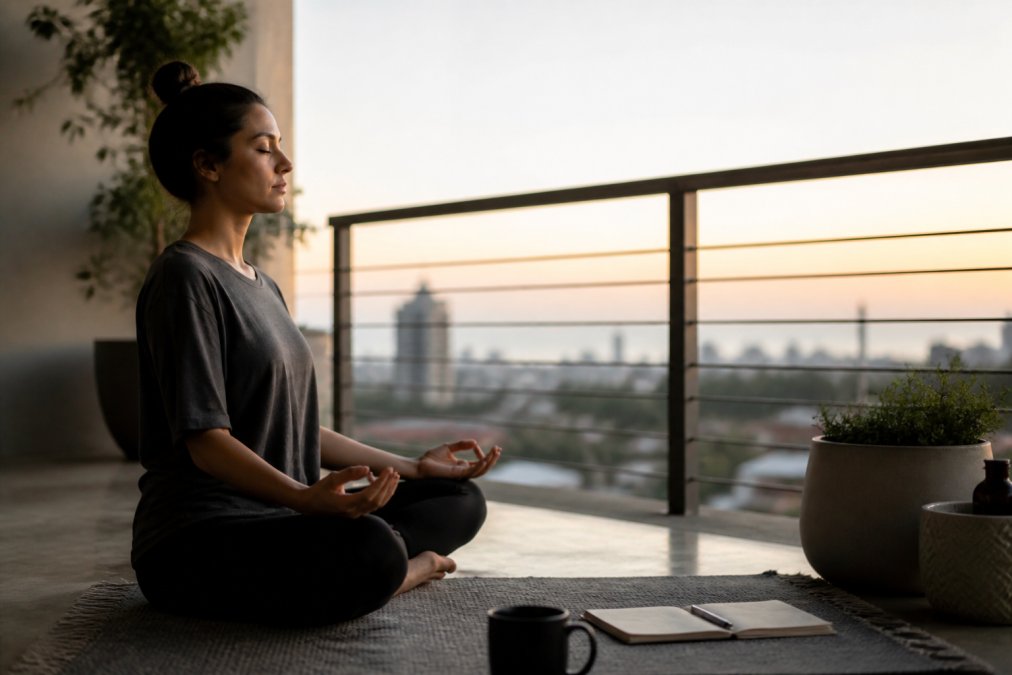
Most mindfulness advice fails because it assumes you have an hour to sit in silence. Learning how to stay mindful daily in just 15 minutes is about weaving presence into the moments you already have. At 12:12, we believe intentional living is a form of wearable affirmation, and this guide breaks down a practical routine that fits into the cracks of a busy day.
A short, consistent practice outperforms a long, sporadic one. A 15-minute daily anchor builds the neural pathway for presence far more effectively than a two-hour session you manage once a month. Below, we show you how to structure those minutes, troubleshoot barriers, and turn mindfulness into a lived experience.
Why Staying Mindful Daily Is Harder Than It Should Be
The biggest mistake is treating mindfulness as a separate activity requiring a special setting. When you believe you need a quiet room, a specific cushion, and zero distractions, you set yourself up for failure. The moment a meeting runs long or your child needs attention, the practice gets dropped.
You are not trying to empty your mind; you are trying to notice when it has wandered. The friction you feel is not weakness but a brain doing its job. Research on habit formation shows linking a new behavior to an existing routine increases stickiness (peer-reviewed research). Instead of fighting your environment, use the chaos as your cue.
The Real Benefits of 15 Minute Mindfulness
A 15-minute daily practice is a physiological intervention with measurable effects on your brain and body. Understanding the mechanisms transforms it from a vague wellness trend into a concrete tool for performance and resilience.
The Neuroscience of the Pause
Focused attention on your breath stimulates the prefrontal cortex, responsible for executive function and impulse control, while down-regulating the amygdala, the brain's alarm center. fMRI research shows consistent practice strengthens the pathways connecting them, giving you a faster 'brake pedal' on stress reactivity (peer-reviewed research).
This shift translates into a lower baseline of cortisol, the primary stress hormone. A 15-minute daily practice interrupts the cortisol spikes from back-to-back meetings and digital pings, reducing 'allostatic load', the wear and tear from chronic stress, linked to improved cardiovascular health and immune response (the NIH).
Cognitive Benefits You Can Measure
The practice of 'noticing and returning' is a direct workout for attentional control. Each time you catch your mind wandering and guide it back to the breath, you strengthen your 'orienting network', the part of the brain that decides where to focus, improving what psychologists call 'executive attention'.
In practical terms, this means you will experience:
- Reduced Mind-Wandering: This is not about emptying your mind; it is about gaining the ability to choose when to let it wander.
- Improved Working Memory: By holding your attention on a single point, you exercise the same neural circuits used to hold multiple pieces of information in mind simultaneously. This directly impacts your ability to follow complex conversations or manage a multi-step project without losing your place.
- Enhanced Emotional Granularity: Regular practice improves your ability to label specific emotions (e.g., 'frustration' vs. 'disappointment'). This skill, known as emotional granularity, is a stronger predictor of mental health than general positivity, as it allows you to respond to situations with more nuance and less reactivity.
The 'Default Mode' Reset
The 15-minute mark is often the threshold where your brain disengages from the 'Default Mode Network' (DMN), the network responsible for self-referential thoughts, rumination, and the 'mental time travel' that leads to anxiety or regret.
A short practice that consistently pulls you out of the DMN trains your brain to spend less time in this ruminative state, reducing the 'stickiness' of negative thought loops. You are not stopping the DMN; you are getting better at noticing when it has taken over and shifting your attention to the present. This is the measurable mechanism behind 'mental clarity'.
Track your 'return count', the number of times you catch your mind wandering during a session. In week one, you might count 20 returns; by week four, that often drops to 8-10. This is a direct metric of your brain's growing ability to sustain focus, you are building a more resilient nervous system, one session at a time.
Daily Mindfulness Routine Examples That Stick
The most effective daily mindfulness routines are anchored to specific times of the day. Rather than a vague promise to "meditate later," attach a practice to a trigger you already have, like your morning coffee or commute. This removes the decision-making friction that kills good intentions.
Morning Anchor: Body Scan Before You Scroll
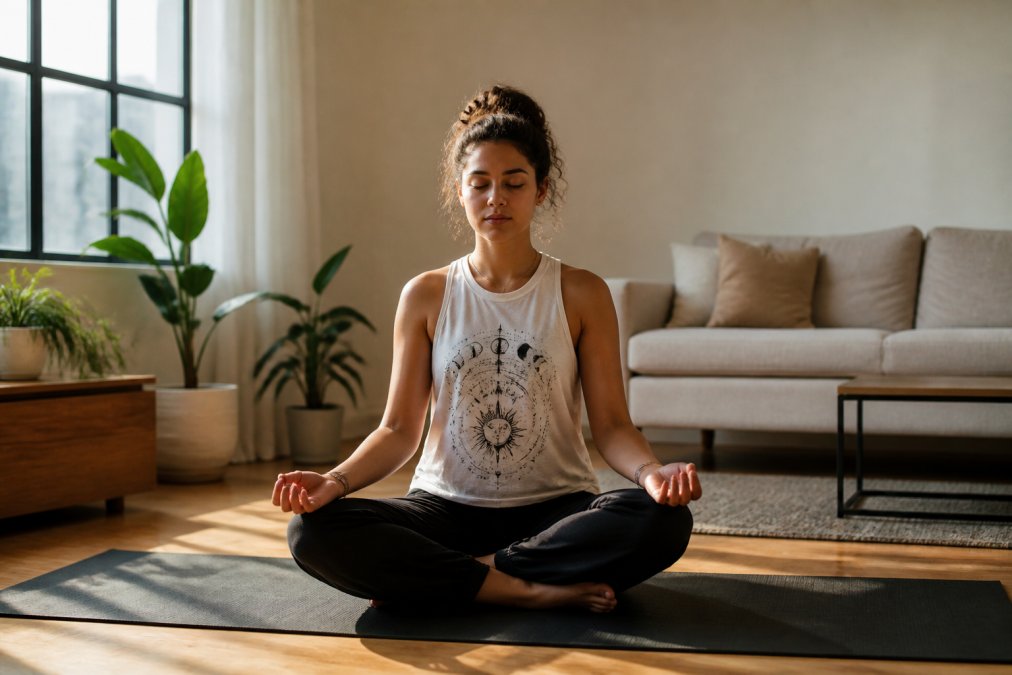
Before you reach for your phone, take five minutes for a body scan. Close your eyes and bring your attention to the top of your head, slowly moving down to your toes. Notice any tension without trying to change it. This practice grounds you in the present moment before the digital world floods your senses with demands and comparisons.
Midday Reset: Conscious Breathing at Your Desk
The afternoon slump is a perfect cue for a reset. Set a timer for five minutes and focus solely on the sensation of your breath entering and leaving your nostrils. When your mind drifts to your to-do list, gently guide it back. This is a form of stress management that you can do without leaving your chair, and it prevents the 3 p.m. mental fog from derailing your entire afternoon.
Evening Wind-Down: Sensory Engagement Without Screens
Replace your evening scroll with a sensory engagement exercise. This could be the feeling of warm water on your hands while washing dishes, the scent of your lotion, or the texture of your pajamas. By focusing on physical sensations, you pull your brain out of the "thinking" loop and into the "sensing" loop, which is essential for deep sleep and psychological well-being.
How to Practice Daily Manifestation With Intention
Manifestation is not magical thinking; it is aligning your focus with your actions. In a world where attention is the most valuable currency, directing it deliberately is digital-age manifestation. This section addresses the elephant in the room: your phone.
The Digital Attention Audit
Before you can manifest anything, reclaim your attention from algorithms. Implement a 'Notification Diet' for 48 hours: disable all non-human notifications from news apps, social media, and shopping platforms. Keep only calls and texts from actual people.
This act alone is a form of manifestation. You are declaring your attention is more valuable than a dopamine hit, creating the mental space for your own thoughts to surface.
The 'Mindful Scroll' Protocol
When you do engage with social media or news, do not do it passively. Use the 'Three-Question Gate' before opening an app:
- Why am I opening this? (Boredom, connection, information, or habit?)
- What am I hoping to feel? (Informed, entertained, or connected?)
- Is this the best way to achieve that? (If you want connection, a text to a friend is more effective than a scroll.)
If you pass the gate, set a timer for 10 minutes. When it goes off, close the app. This is not about willpower; it is about creating a boundary that protects your intention.
The 'Intention-to-Action' Loop
Manifestation requires a feedback loop between your internal state and external actions. Here is a structured protocol:
- Morning (7:00 AM): During your body scan, set a single 'Theme Intention.' Instead of a goal like 'get a promotion,' frame it as a quality: 'Today, I will embody clarity and calm confidence.' This is a state you can control, regardless of external events.
- Midday (12:30 PM): Before you open your email or go to lunch, ask yourself: 'What is one action I can take in the next hour that aligns with my theme?' This forces your brain to translate the abstract intention into a concrete behavior.
- Evening (8:00 PM): Review your day. Did you take that action? If yes, note it. If no, ask 'What was the barrier?' This is not a judgment; it is data. The barrier is usually a digital distraction or a reactive habit. Use this information to adjust your environment for the next day.
The 'Digital Declutter' as a Manifestation Ritual
Once a week, spend 15 minutes deleting apps you have not used in the past month and unsubscribing from email lists that do not serve your current intention. This is a physical act of clearing space for what you want to attract. It is a tangible manifestation of your commitment to a less cluttered, more intentional life.
By integrating these digital boundaries, you transform manifestation from a passive wish into an active, habitual alignment. You are not just hoping for a better life; you are actively curating the inputs that shape your thoughts, feelings, and actions. This is the most powerful form of manifestation available in the modern world.
Staying Mindful in High-Stress Professional Environments
It is easy to be mindful on a yoga retreat; it is different in a high-stakes meeting, where your heart rate climbs and your thinking narrows. The antidote is a micro-practice called "grounding techniques." Before responding to a stressful email or entering a difficult conversation, take three conscious breaths. Feel your feet on the floor and your back against the chair.
This creates a physiological pause that interrupts the fight-or-flight response, allowing you to choose a thoughtful response instead of a reactive one. You are not clearing your mind of stress; you are adding a layer of awareness on top of it, acknowledging the stress while acting with inner calm.
Troubleshooting Common Mindfulness Barriers
If you skip your practice, the issue is usually not willpower but a mismatch in approach. A common barrier is believing you are "bad at meditating" because your mind wanders. The wandering is the practice, each time you notice the distraction and return to your breath, you are doing a repetition of the mental muscle.
Another barrier is choosing a time when you are already exhausted. Meditating when you are falling asleep is not effective. Move your practice to a time when you have energy, even if it means doing it in your car before entering the house. The table below summarizes these barriers and fixes.
| Barrier | Common Mistake | Effective Fix |
|---|---|---|
| "Mind won't stop racing" | Forcing thoughts away | Acknowledge and label the thought, then return to breath |
| "Too tired at night" | Meditating in bed | Move practice to a post-work or early evening slot |
| "No quiet space" | Waiting for silence | Use noise-canceling headphones or focus on a sound anchor |
| "Inconsistent schedule" | Relying on memory | Attach the practice to an existing daily cue |
Your Daily Mindfulness Toolkit
To support your 15-minute routine, you need tools that serve as reminders of your intention. This is where a wearable affirmation becomes powerful. Wearing clothing with specific meaning can act as a physical anchor, pulling you back to the present moment when you catch a glimpse of it.
A minimalist aesthetic helps because it whispers a quiet reminder rather than shouting for attention. Choosing apparel aligned with your spiritual goals extends your practice beyond the cushion, turning your body into a living altar for your daily intention.
To make this tangible, consider a piece from 12:12 that corresponds to a number you are seeing frequently. For example, the 444 Angel Number Tank Top is designed for those who need a reminder of divine protection, while the 222 Angel Number Long Sleeve Shirt speaks to trusting the timing of your life. These pieces are not just clothing; they are touchstones for your practice.


Conclusion: Wear Your Intention
Staying mindful daily is less about perfection and more about consistency. A 15-minute routine anchored in your morning, midday, and evening builds a foundation of mental clarity that supports every other goal. The barriers you face are not obstacles; they are cues to return to your breath.
At 12:12, we design premium, minimalist apparel that serves as a constant reminder that you are exactly where you are meant to be. Our celestial tees and hoodies are crafted to support your practice, helping you stay aligned and move with purpose throughout your day. Explore the collection and find a piece that resonates with your current intention.
Frequently Asked Questions
How do I practice mindfulness daily without it feeling like a chore?
Anchor mindfulness to habits you already have. Do a 60-second body scan right after brushing your teeth. Practice conscious breathing while your coffee brews. Choose one daily routine example, like mindful eating at lunch or sensory focus during your commute, and commit to it for one week. Habit formation research shows small, consistent anchors beat occasional long sessions. The goal is to stay mindful daily, not perfectly.
What are the real benefits of 15 minute mindfulness sessions?
A 15-minute daily practice is enough to shift your nervous system. You get stress reduction, better emotional regulation, and improved focus and concentration without needing an hour of meditation. This duration fits a lunch break or morning routine, making it sustainable. Over time, 15 minutes daily builds attention span and inner calm more effectively than sporadic longer sessions. Consistency matters more than duration.
How to practice daily manifestation when I don't have time to meditate?
Daily manifestation is about intentional living, not long rituals. Start with setting an intention while you get dressed: choose one piece of clothing, like a 777 hoodie or an 11:11 tank, and let it be a wearable affirmation for the day. Pair this with two minutes of non-judgmental observation of your thoughts. This connects your outer choices to your inner state, making manifestation a practical, daily act.
How can I stay mindful while working in a distracting office?
Use transition moments as mindfulness triggers. Before opening your inbox, take three conscious breaths. When you feel mental fatigue building, step away for a two-minute grounding technique: name five things you see, four you hear, and three you feel. These micro-practices reduce stress and rebuild cognitive focus without disrupting your workflow, helping you stay mindful daily even in high-pressure environments.
Structuring a daily practice is the first step, but maintaining it requires reminders that fit your lifestyle. Let 12:12 support your journey with wearable affirmations that keep your focus on the present moment. Shop the Collection and turn your intention into a daily habit.
This article was written using GrandRanker
Frequently Asked Questions
Q: How do I practice mindfulness daily without it feeling like a chore?
A: Anchor mindfulness to habits you already have. Do a 60-second body scan right after brushing your teeth. Practice conscious breathing while your coffee brews. Choose one daily routine example, like mindful eating at lunch or sensory focus during your commute, and commit to it for one week. Habit formation research shows small, consistent anchors beat occasional long sessions. The goal is to stay mindful daily, not perfectly.
Q: What are the real benefits of 15 minute mindfulness sessions?
A: A 15-minute daily practice is enough to shift your nervous system. You get stress reduction, better emotional regulation, and improved focus and concentration without needing an hour of meditation. This duration fits a lunch break or morning routine, making it sustainable. Over time, 15 minutes daily builds attention span and inner calm more effectively than sporadic longer sessions. Consistency matters more than duration.
Q: How to practice daily manifestation when I don't have time to meditate?
A: Daily manifestation is about intentional living, not long rituals. Start with setting an intention while you get dressed: choose one piece of clothing, like a 777 hoodie or an 11:11 tank, and let it be a wearable affirmation for the day. Pair this with two minutes of non-judgmental observation of your thoughts. This connects your outer choices to your inner state, making manifestation a practical, daily act.
Q: How can I stay mindful while working in a distracting office?
A: Use transition moments as mindfulness triggers. Before opening your inbox, take three conscious breaths. When you feel mental fatigue building, step away for a two-minute grounding technique: name five things you see, four you hear, and three you feel. These micro-practices reduce stress and rebuild cognitive focus without disrupting your workflow, helping you stay mindful daily even in high-pressure environments.