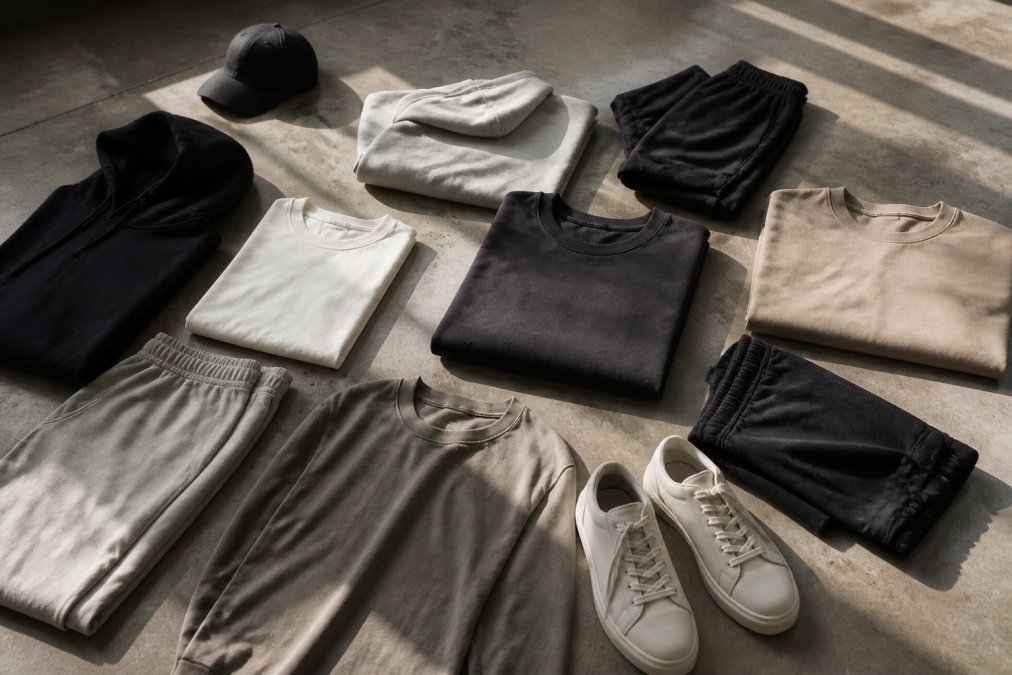
 listicle
Sustainable Minimalist Streetwear 2026: 7 Picks That Last
Table of Contents
- What Sustainable Minimalist Streetwear 2026 Actually Means
- Quick Comparison: 12:12 Pieces Worth Owning
- High Quality Minimalist Aesthetic Tees That Hold Their Shape
- How to Style Minimalist Streetwear Without Looking Bland
- Building a Capsule Wardrobe Around Minimalist Streetwear 2026
- Resale, Supply Chain Transparency, and End-of-Life Care
- Conclusion
- Frequently Asked Questions
Last Updated: September 12, 2026
What Sustainable Minimalist Streetwear 2026 Actually Means
Sustainable minimalist streetwear 2026 is a design philosophy that pairs pared-back silhouettes with low-impact materials and production methods. It rejects the churn of trend-driven fashion in favor of fewer, better pieces built to survive years of wear. This guide from 12:12 breaks down what actually separates durable minimalist streetwear from greenwashed basics.
The shift matters because the old model is failing. The EPA reports that textiles make up a significant share of municipal solid waste, and clothing production has roughly doubled since the early 2000s while the average garment is worn far less (the EPA). That gap between what we buy and what we wear is the real problem.
Sustainable minimalist streetwear is clothing that combines a restrained, urban aesthetic with responsible sourcing, durable construction, and a neutral color palette that resists trend cycles.
The 7 pieces we cover below were selected on fabric weight, wash longevity, and versatility, not on marketing claims. But first, here's what most guides get wrong.
Quick Comparison: 12:12 Pieces Worth Owning
Every piece below comes from 12:12's Celestial collection, which uses vintage-washed cotton for a broken-in feel from day one. Prices reflect current listings.
| Piece | Price | Fabric | Best For |
|---|---|---|---|
| Celestial 11:11 Oversized Tee | $33.33 | Vintage-washed cotton | Manifestation wear |
| 222 Oversized Tee | $33.33 | 100% cotton | Everyday layering |
| Celestial 777 Oversized Tee | $33.33 | Vintage-washed cotton | Statement styling |
| 777 Essential Boxy Hoodie | $66.66 | Fleece blend, 10.2 oz/yd² | Cold-weather layering |
| 11:11 Loose Tank | $22.22 | Cotton blend | Warm-weather wear |
| 444 Performance Tank | $22.22 | Moisture-wicking blend | Training and yoga |
For anyone building a capsule wardrobe, these six pieces cover most of what a week demands. Free shipping applies on orders over $50, so pairing a tee with a tank clears that threshold easily.

High Quality Minimalist Aesthetic Tees That Hold Their Shape
High quality minimalist aesthetic tees share three traits: heavier fabric weight, reinforced stitching at stress points, and prints that survive repeated washing. Lightweight cotton pills and stretches within months. The 11:11 and 222 oversized tees use a vintage wash that softens the hand feel without thinning the weave.

Fabric Weight and Wash Longevity
Garment longevity comes down to fiber and construction. A 100% cotton tee with a substantial weight holds its silhouette far longer than a thin cotton-poly blend. Wash cold, inside out, and tumble dry low to slow shrinkage and protect the print.
Fit and Silhouette
The dropped-shoulder, oversized cut defines the minimalist silhouette here. Size down for a closer fit or keep it relaxed for layering. The 777 tee leans into a bolder graphic, while the 222 stays quieter for everyday rotation.
How to Style Minimalist Streetwear Without Looking Bland
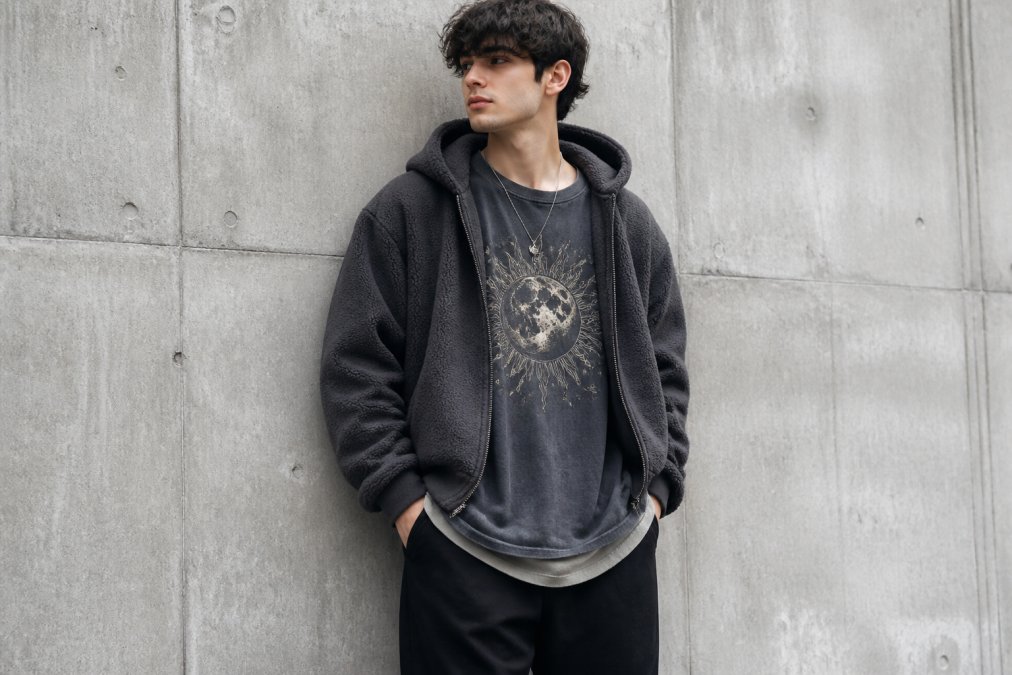
Styling minimalist streetwear without looking bland comes down to layering, proportion, and texture contrast. A neutral palette only reads as flat when every piece has the same weight and finish. Mix a heavyweight fleece over a lighter tee and the outfit gains depth instantly.
Layering and Proportion
Balance volume with volume. An oversized hoodie over an oversized tee works when the bottom half stays clean, straight-leg denim or tailored trousers. Add one accent, a cap or a single ring, and stop there.
Stacking too many oversized pieces reads as shapeless rather than intentional. Proportion is what separates a considered outfit from a sloppy one.
Building a Capsule Wardrobe Around Minimalist Streetwear 2026
A capsule wardrobe built on minimalist streetwear 2026 principles typically holds 8-12 pieces that mix freely. The goal is cost-per-wear: a $33.33 tee worn twice a week for a year costs pennies per wear, while a fast-fashion shirt worn three times costs far more per outing. Most practitioners find that a capsule only works when it is sized to your actual body and your actual week, not to a generic list.
A Working Framework
- Two heavyweight tees in neutral tones (11:11, 222)
- One statement graphic tee (777)
- One boxy fleece hoodie for layering
- One performance tank for training
- One loose tank for warm weather
- Straight-leg denim or tailored trousers
- One neutral overshirt or jacket
- One pair of clean sneakers
This set covers most weeks without repetition. The capsule approach also reduces overconsumption directly, since every purchase has to earn its place.
Sizing and Fit: The Inclusive-Design Gap
Most minimalist capsule guides assume a narrow size range, which is one of the biggest underserved gaps in sustainable streetwear. A capsule that does not fit you is not sustainable, it is waste waiting to happen. When you build yours:
- Measure, don't guess. Take chest, shoulder, and inseam measurements and compare them to each brand's size chart, not to the size you wear in other brands. Oversized cuts from different labels can vary by 2-3 inches at the chest.
- Prioritize adjustable silhouettes. Drawstring waists, elastic cuffs, and dropped shoulders accommodate more body types and weight fluctuation over a garment's life.
- Ask about extended sizing. If a brand's size chart stops at XL or 2XL, that is a signal about how broadly the design was intended to serve. Brands that publish full measurement tables and offer extended ranges make capsule building far easier.
- Check return and exchange policies before buying. Made-to-order pieces often have narrower return windows, so confirm fit terms first.
Budgeting for Investment Pieces
A realistic capsule budget for 2026 breaks into three tiers:
- Foundation tier ($20-$40 per piece): tees and tanks. These take the most wear and the most washing, so fabric weight matters more than brand name.
- Mid tier ($60-$120 per piece): hoodies, overshirts, and knitwear. Look for reinforced seams and heavier fabric weights (10 oz/yd² and up for fleece).
- Anchor tier ($120+ per piece): outerwear, denim, and footwear. These should last multiple years and are worth the highest spend.
A common pattern is to allocate roughly 50% of a capsule budget to the anchor tier, 30% to mid tier, and 20% to foundation pieces, then replace foundation pieces as they wear out rather than buying everything at once.
Sourcing the Capsule Through Resale
Most guides tell you to buy new. A stronger approach is to source part of your capsule from resale and vintage marketplaces, which extends garment life and often costs less than retail:
- Search by fabric and construction, not by trend. Terms like "heavyweight cotton tee," "boxy fleece," or "selvedge denim" surface better-built pieces than brand-name searches.
- Inspect listings for wear signals. Pilling, stretched collars, and faded prints are the three most common reasons a resale piece disappoints. Ask sellers for close-up photos of seams and hems.
- Check resale value before you buy new. A well-kept heavyweight tee from a known label often resells for 40-60% of retail, which tells you the piece holds value, a useful proxy for durability.
- Verify authenticity on branded pieces. Counterfeit streetwear is common on resale platforms; request original tags and receipts where possible.
Resale, Supply Chain Transparency, and End-of-Life Care
Circular fashion depends on two things most brands skip: knowing where materials come from and planning for what happens when a garment wears out. This section goes deeper than the usual "buy less, choose well" advice, it gives you a framework for evaluating transparency and a plan for end-of-life.
Supply Chain Transparency: A Tier Framework
"Sustainable" is meaningless without knowing which part of the supply chain a brand is actually talking about. A useful way to evaluate transparency is by tier:
- Tier 1, Final assembly. The factory that cuts and sews the garment. Most brands can name this one.
- Tier 2, Fabric and material processing. Mills, dye houses, and tanneries. Fewer brands disclose these, and this is where water use and chemical runoff concentrate.
- Tier 3, Raw materials. Cotton farms, fiber producers, and raw material extraction. Very few brands can trace to this level.
A brand that only names its Tier 1 factory is telling you very little. A brand that publishes Tier 2 and Tier 3 suppliers, or names its fiber origin and dye process, is giving you something you can actually verify. When you evaluate a label, ask three questions:
- Can they name the country and facility where the garment was sewn?
- Can they name the mill or dye house that produced the fabric?
- Can they describe the fiber origin (e.g., organic cotton from a named region, recycled polyester from a named feedstock)?
If the answer to all three is "we don't disclose that," treat the sustainability claim as marketing until proven otherwise.
Made-to-Order and Deadstock Reduction
End-of-Life Garment Management
When a tee finally wears through, the responsible options are more varied than most people realize:
- Repair first. A blown seam or a small hole can often be fixed for a few dollars at a local tailor or with a basic sewing kit. Repairing extends life by months or years and is almost always the lowest-impact option.
- Brand take-back programs. Some brands accept their own garments back for resale, repair, or recycling. Check whether the program actually recycles versus downcycles into lower-value products like insulation or wiping cloths.
- Textile recycling. Municipal textile recycling varies widely by location. Curbside programs rarely accept textiles; drop-off locations and mail-in programs are more common. Contaminated or blended fabrics are harder to recycle than single-fiber garments.
- Donation. Donation extends life but is not a guarantee of reuse, a significant share of donated textiles is exported or downcycled. Donate only clean, wearable items.
- Repurposing. Worn-out cotton tees make good cleaning cloths, which is a legitimate final use before disposal.
Resale as a Circularity Tool
Resale marketplaces extend garment life further, and a well-kept 222 or 777 tee holds resale value better than a faded fast-fashion basic. The mechanics matter: resale works best for pieces with durable construction, neutral colors, and recognizable quality, because those are the pieces buyers actually search for. Fast-fashion pieces with trend-driven prints rarely resell at meaningful value.
For readers comparing brands, the FTC's Green Guides on environmental marketing claims set the standard for what "sustainable" can legally mean in advertising. And the EPA's textile waste data shows why end-of-life planning is not optional.
"Recycled" and "recyclable" are not the same claim. A garment made from recycled fiber may still be difficult to recycle at end of life, especially if it is a fiber blend. Ask which claim the brand is actually making.
Conclusion
Building a wardrobe around sustainable minimalist streetwear 2026 takes discipline, since every piece has to justify its place. The reward is a closet that works harder with less, and clothing that reminds you why you chose it. 12:12 designs premium angel number apparel as wearable affirmations, with vintage-washed cotton tees, a boxy fleece hoodie, and performance tanks built for daily rotation. Free shipping on orders over $50 makes it easy to start a capsule without overcommitting.
Frequently Asked Questions
What are the sustainable clothing trends for 2026?
Sustainable minimalist streetwear 2026 leans on three shifts: recycled polyester and organic cotton replacing virgin synthetic fibers, and neutral color palettes designed for layering across seasons. Circular fashion programs and resale marketplaces are also gaining traction. The focus has moved from buying more to buying fewer, better pieces with a documented supply chain.
What is the 3-3-3 rule for clothing?
The 3-3-3 rule suggests building outfits from three tops, three bottoms, and three pairs of shoes that all work together. Applied to minimalist streetwear, it means choosing pieces in a shared neutral color palette so every combination functions. A vintage-washed tee, a boxy fleece hoodie, and a loose tank can each pair with the same two or three bottoms, which raises your cost-per-wear and reduces overconsumption.
How does minimalist streetwear differ from traditional streetwear?
Traditional streetwear leans on loud logos, limited drops, and high-volume graphics. Minimalist streetwear strips that back to a restrained silhouette, a neutral color palette, and one focal design element. The construction quality and fit carry the look instead of branding. That shift makes each piece easier to style across contexts and easier to keep wearing past a single trend cycle.
What materials define sustainable streetwear in 2026?
Organic cotton, recycled polyester, and biodegradable fabrics anchor most sustainable streetwear lines now. Look for fabric weight listed in ounces per square yard, since heavier cotton holds shape longer and resists the pilling that shortens garment longevity. Blends matter too: a 53% polyester, 42% cotton fleece blend balances warmth with durability. Synthetic fiber alternatives like Tencel are appearing more often as well.
How can I build a capsule wardrobe using minimalist streetwear?
Start with four to six tops in a shared neutral color palette, then add two bottoms and one outer layer. Choose pieces you can layer together, like an oversized tee under a boxy fleece hoodie. Track cost-per-wear rather than sticker price: a $33.33 tee worn 60 times costs about $0.56 per wear. Add resale or donation as the end-of-life plan for anything you replace.
The real challenge isn't finding minimalist streetwear. It's resisting the urge to buy more than you'll wear. 12:12 builds each piece as a wearable affirmation, from the 11:11 oversized tee to the 444 performance tank, so your wardrobe reinforces your intentions every time you get dressed. Start with one piece, see how it fits your rotation, and build from there. Shop the 12:12 collection and dress with intention.