 ultimate-guide
What Is Intentional Fashion and Its Benefits?
Table of Contents
- What Is Intentional Fashion?
- The Benefits of Intentional Fashion
- How to Build an Intentional Wardrobe in 5 Steps
- The 3-3-3 Rule for Fashion: A Simple Framework
- Intentional Dressing Examples You Can Copy
- What Intentional Fashion Costs (and What It Saves)
- Frequently Asked Questions
Last Updated: October 4, 2026
What Is Intentional Fashion?
Intentional fashion is the practice of choosing clothing based on personal values, genuine need, and long-term wear rather than impulse or trend pressure. It treats every purchase as a deliberate decision about how you want to look, feel, and live. At 12:12, we build minimalist luxury streetwear around that same idea: a hoodie or tee you reach for daily because it means something to you, not because a trend cycle told you to buy it.
The core principles are straightforward:
- Buy less, and choose well when you do buy
- Prioritize fit, comfort, and fabric quality over logos and novelty
- Let personal style and self-expression guide the decision, not advertising
- Consider durability, garment longevity, and end-of-life before you check out
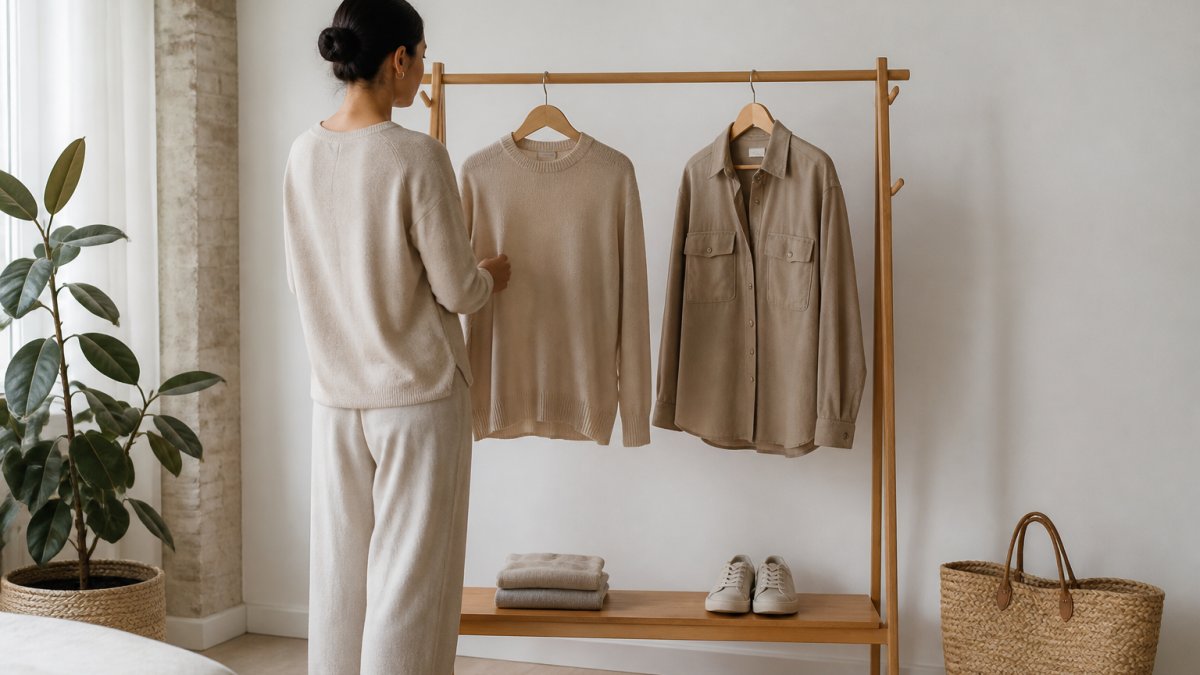
How Intentional Fashion Differs From Slow and Sustainable Fashion
Intentional fashion is the personal decision-making layer: why you buy, how often, and whether a piece earns its place in your wardrobe. Slow fashion is the production-side response to fast fashion, favoring smaller runs and longer design cycles. Sustainable fashion focuses on environmental and ethical outcomes: materials, water usage, textile waste, fair wages, and supply chain transparency. Mindful dressing is the daily habit, the moment-to-moment awareness of what you put on and why.
The four overlap constantly, but they are not synonyms. A garment can be sustainably produced and still be an impulse buy. A secondhand purchase can be intentional even though it involved no new production at all. Most guides blur these together; keeping them separate makes your own choices far easier to evaluate.
The Benefits of Intentional Fashion
Most articles list the benefits of intentional fashion as a mood board: confidence, sustainability, less clutter. That is true but not useful. The benefits are easier to trust when you can see the mechanism behind each one and measure it yourself.
Financial: cost per wear replaces sticker price. Cost per wear is the purchase price divided by the number of times you actually wear the garment. A $120 hoodie worn twice a week for two years works out to roughly $1.15 per wearing. A $25 trend tee worn four times costs about $6.25 per wearing, more than five times as much per use, despite costing a fifth as much upfront. The math is not anti-cheap-clothing; it is anti-rarely-worn-clothing.
Environmental: fewer purchases compound. The environmental case for intentional fashion is not that any single garment is "green." It is that buying fewer, longer-lived items reduces the total volume of production, shipping, and disposal you are responsible for. Apparel production is resource-intensive at scale, textile dyeing and finishing are widely cited as major industrial water users, and textile waste is a well-documented municipal solid waste stream.
Cognitive: fewer decisions, less fatigue. A curated wardrobe removes the daily guesswork of "what do I wear." Decision fatigue is real, and getting dressed is one of the first decisions most people make each day. When your closet contains only pieces that fit, work together, and suit your actual life, the morning decision collapses from a search problem into a selection problem.
Physical: fit and comfort improve. When you stop buying for the label and start buying for your body, comfort and fit improve as a direct consequence. This is not a soft benefit, it is the most reliable one. A garment that fits well gets worn; a garment that fits poorly gets returned, resold, or forgotten.
Psychological: confidence and self-alignment. Confidence follows when what you wear stops fighting your self-image and starts reinforcing it. The mechanism is consistency: when your clothing matches your values and your sense of self, you spend less energy managing the mismatch. People describe this as well-being, but it is closer to the absence of a low-grade friction they had stopped noticing.
Cultural: getting dressed becomes a statement. Clothing carries meaning. Wearing something deliberately chosen turns getting dressed into a small daily statement rather than a chore, and that meaning is legible to the people around you, whether or not they can articulate why.
The honest caveat: none of these benefits require a minimalist wardrobe, and a smaller wardrobe is not the right goal for everyone. Someone whose work, climate, or life stage demands variety can dress intentionally at any closet size. The benefits come from the reasoning behind each purchase, not from the number of hangers.
How to Build an Intentional Wardrobe in 5 Steps
Building an intentional wardrobe takes an honest audit, a clear set of criteria, and a willingness to walk away from purchases that do not meet them. Here is the sequence we recommend.
- Audit what you own. Pull everything out. Sort into three piles: worn regularly, worn rarely, and never worn. The never-worn pile is your most useful data.
- Identify your actual patterns. Note the colors, fits, and fabrics in the "worn regularly" pile. This is your real personal style, not the one you aspire to.
- Set purchase criteria. Before buying anything, decide what a piece must satisfy: fit, fabric quality, durability, and whether it works with at least three existing items.
- Apply a waiting period. Give any non-essential purchase a set number of days. Most impulse buys do not survive the wait.
- Fill gaps deliberately. Replace worn-out staples first, then add pieces that expand what your wardrobe can do.
The 3-3-3 Rule for Fashion: A Simple Framework
The 3-3-3 rule is a practical constraint that keeps intentional dressing from turning into overthinking. It suggests three colors, three occasions, and three years.
- Three colors form the base of your wardrobe, so everything mixes without effort
- Three occasions cover your real life, such as work, casual, and something dressier
- Three years is the minimum lifespan you expect from a piece before you buy it
The point is not the number three itself. It is that a fixed constraint forces honest decisions at the point of purchase. If a garment fails two of the three tests, it is not a wardrobe addition, it is clutter with a receipt.
Intentional Dressing Examples You Can Copy
Intentional dressing looks different depending on your budget, size, ability, and lifestyle, which is exactly why rigid "capsule wardrobe" formulas fail so many people. What stays constant is the reasoning behind each choice.
777 Essential Oversized Boxy Fit Cozy Spiritual Hoodie →
Here are three concrete examples.
The workweek uniform. One well-fitting oversize fleece hoodie in a neutral tone, rotated with two tees and one pair of trousers. Fewer decisions, consistent comfort, and pieces that survive repeated washing. A hoodie like our 777 Essential Oversized Boxy Fit Cozy Spiritual Hoodie fits this role because the relaxed silhouette works across settings and the fabric weight holds up to regular wear.

The limited-mobility wardrobe. Prioritize pull-on styles, soft seams, and fabrics that do not restrict movement. Intentional here means removing friction, not chasing aesthetics.
The tight-budget approach. Buy secondhand first, repair before replacing, and spend only on the pieces you wear most. A smaller wardrobe of better garments usually costs less over time than a rotating stack of cheap ones.
What Intentional Fashion Costs (and What It Saves)
Intentional fashion usually costs more per item and less per year. That trade-off is the whole point, and it is the part most guides skip. Here is the version with numbers you can check against your own spending.
The formula. Cost per wear = purchase price ÷ number of wears. Track it for a month and the pattern becomes obvious. A $40 pair of jeans worn 100 times costs $0.40 per wear. A $15 pair worn five times costs $3.00 per wear, seven and a half times more per use. The cheaper garment is the more expensive one.
Where the savings actually come from. Three places, in order of impact:
- Fewer purchases. The waiting period alone eliminates most impulse buys. If you buy 20 garments a year and cut that to 10, you have halved your clothing spend before any per-item math.
- Longer garment life. A piece that lasts three years instead of one is amortized over three times as many wears. Repair extends this further, a $15 repair on a $120 jacket you would otherwise replace is a clear win.
- Lower cost per wear. The two effects above compound. Fewer items, each worn more often, each lasting longer, produces a cost-per-wear number that trend buying cannot match.
The costs are real. Quality pieces carry a higher upfront price. Building a wardrobe this way takes patience and a willingness to walk away from purchases. And there is a genuine limitation worth naming plainly: not everyone can afford the higher upfront cost, and no amount of "buy less, buy better" advice changes a tight monthly budget. Secondhand, swapping, and repair close part of that gap, but not all of it. Anyone who tells you intentional fashion is free is selling something.
| Approach | Upfront Cost | Cost Per Wear | Typical Lifespan |
|---|---|---|---|
| Trend-driven buying | Low per item | High | One season |
| Intentional buying | Higher per item | Low | Several years |
| Secondhand and repair | Lowest | Lowest | Varies by garment |
Measuring your own impact. Track what you spend on clothing over a year, count how many items you actually wore, and divide. Most people find the number uncomfortable, which is the useful part. Two other numbers are worth tracking: purchase frequency (how many items you buy per year) and wear count per item (how many times each gets worn before it leaves your closet). Together they tell you whether you are buying intentionally or just buying.
The trade-offs nobody mentions. Greenwashing is real, "sustainable" is not a regulated term, and a garment can carry an eco-friendly label and still be an impulse buy. Affordability and access vary widely by size, ability, and location; secondhand selection is not equally available to everyone. And a smaller wardrobe is not the right goal for every person or every life stage. The throughline is not minimalism. It is a spending discipline: buy fewer things and mean all of them.
Frequently Asked Questions
What is the 3-3-3 rule for fashion?
The 3-3-3 rule is a wardrobe-building guideline: choose 3 tops, 3 bottoms, and 3 pairs of shoes that all mix and match with each other. That gives you 27 outfit combinations from just 9 pieces. It works because every item coordinates, so you spend less time deciding what to wear and more time actually wearing what you own.
What are the benefits of intentional fashion?
Intentional fashion lowers your cost per wear because you buy fewer, better pieces you actually wear. It reduces decision fatigue, cuts textile waste from impulse purchases, and makes getting dressed feel calmer. Many people also find that wearing clothes tied to their personal values, whether that is sustainability or spiritual meaning, supports confidence and a sense of alignment throughout the day.
How is intentional fashion different from sustainable fashion?
Sustainable fashion focuses on how a garment is made: materials, water usage, ethical production, and supply chain conditions. Intentional fashion focuses on why and how you buy and wear it: your personal style, values, and long-term wardrobe plan. They overlap often, but you can dress intentionally on any budget, and a sustainably made item you never wear still is not an intentional purchase.
How do you build an intentional wardrobe?
Start by clearing out anything you have not worn in a year. Then define your personal style in three words, note the gaps in your rotation, and set a clear framework before you shop. When you buy, check fabric quality, fit, and how many existing pieces the new item pairs with. A wearable affirmation piece, like a hoodie with symbolic meaning, can anchor the wardrobe around your values.
How do the clothes you wear affect your confidence?
Clothing affects confidence through fit, comfort, and meaning. A garment that fits well removes distraction, and one that carries personal significance, such as an angel number design or a piece tied to a milestone, acts as a reminder of who you are showing up as. That combination of physical comfort and symbolic weight is why intentional dressing often feels different from simply following trends.
How do you shop more intentionally for clothes?
Wait 72 hours before buying anything unplanned, and ask three questions: Does it match at least three items I already own? Will I wear it at least 30 times? Does it reflect my values? If any answer is no, skip it. Buying less and choosing well beats chasing trend cycles, and it keeps your cost per wear low over the life of the garment.