 how-to
How to Practice Conscious Consumption in Luxury Fashion
Table of Contents
- Understand Your Motivation for Conscious Consumption
- How to Spot Ethical Clothing Before You Buy
- Research Brand Practices and Supply Chain Transparency
- Conscious Fashion Shopping Tips for Intentional Purchases
- Evaluate Materials and Natural Fibers for Longevity
- Explore Secondhand Luxury Fashion as a Sustainable Option
- How to Care for Luxury Clothing to Maximize Its Lifecycle
- Calculate Cost Per Wear and Build Your Intentional Wardrobe
- Frequently Asked Questions
Last Updated: October 19, 2026
Understand Your Motivation for Conscious Consumption
How to practice conscious consumption in luxury fashion begins with understanding what drives your choices: filling an emotional gap, chasing trends, or building a wardrobe that serves your life?
At 12:12, we believe intentional fashion starts with honest self-reflection. Understanding your true needs means purchases that stick around instead of gathering dust.
Ask yourself these questions:
- Do I need this, or do I want it in this moment?
- Will I wear this in six months?
- Does this align with my personal style and values?
How to Spot Ethical Clothing Before You Buy
Ethical clothing is about the entire journey from raw material to your closet. Learning how to spot ethical clothing lets you choose in line with your values.
Start by checking these visible indicators:
- Garment construction quality: Look at seams, stitching, and hems. Are they even and secure? Poor construction means the piece won't last.
- Fabric content labels: Read the fiber composition. Natural fibers like organic cotton, linen, and wool tend to be more durable and sustainable than synthetics.
- Brand transparency: Does the company clearly state where items are made? Vague sourcing is a red flag.
Feel the fabric: quality materials have weight and texture. A luxury piece should feel like an investment, not a disposable item.
Research Brand Practices and Supply Chain Transparency
Research brand practices and supply chain transparency separates genuinely ethical brands from those using buzzwords, you need to know who made your clothes and under what conditions.
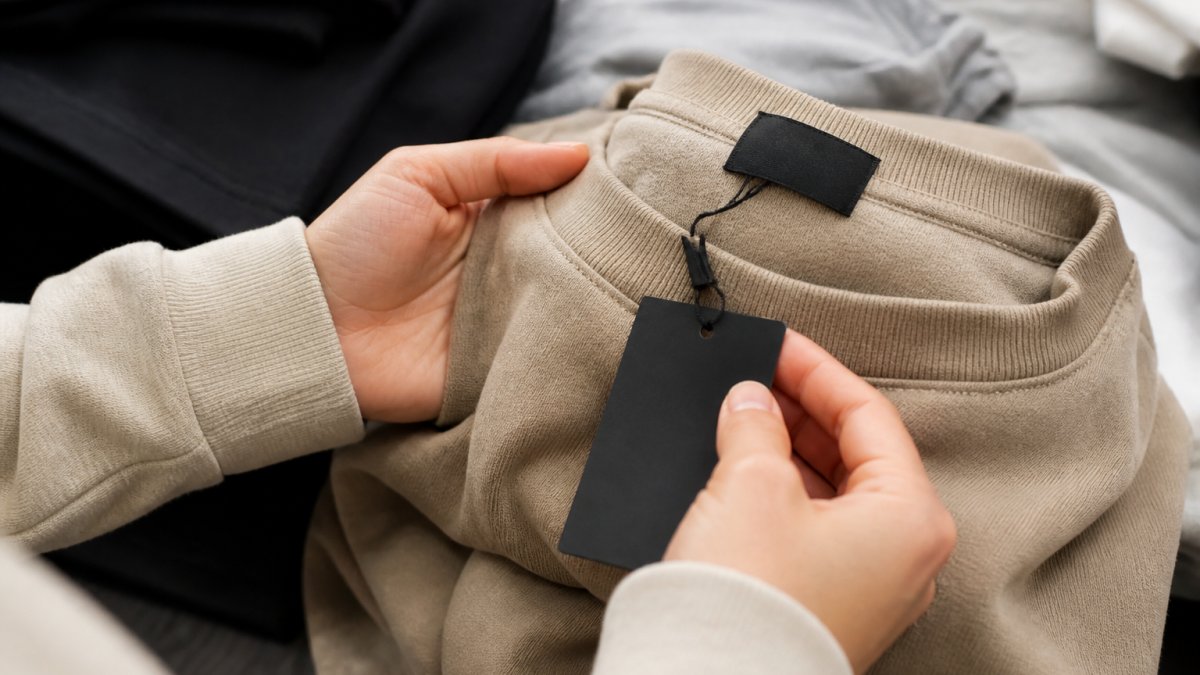
Most luxury shoppers stop at the sustainability landing page, which is marketing. Verifiable information lives one or two clicks deeper, supplier lists, factory disclosures, certification registries, annual impact reports.
A practical checklist for verifying sustainability claims
Work through these in order. A brand that passes the first three and stumbles on the last two is telling you something.
- Identify the specific claim. "Sustainable," "conscious," and "responsibly made" are moods, not claims. Look for a specific assertion: "100% GOTS-certified organic cotton," "Fair Trade Certified factory in [region]," "bluesign-approved dyehouse," "B Corp certified since [year]." If the brand cannot state a claim precisely, there is nothing to verify.
- Check the certification against the certifier's own registry. GOTS, B Lab, Fair Trade USA and bluesign all publish public databases. Look the brand up at the source, not on its own page, a logo without a registry entry is a red flag.
- Read the supplier disclosure, not the supplier story. Mature luxury brands publish a tiered supplier list, Tier 1 (cut-make-trim), Tier 2 (fabric mills), Tier 3 (raw material). A brand that names Tier 1 factories but goes vague at Tier 2 is hiding where most water, chemical, and labor risk sits. No supplier list? A factory count and country breakdown beats a narrative.
- Cross-check materials claims against fiber standards. "Recycled" needs GRS or RCS certification; "organic" cotton should carry GOTS or USDA Organic; "responsible" wool should point to RWS or ZQ; "traceable" cashmere should name a traceability program. No standard attached means unverified.
- Look for the uncomfortable disclosures. Genuine transparency includes numbers marketing would rather not publish: emissions totals, water withdrawal, wage data, audit findings, remediation steps. A brand that publishes only wins is promotional, not transparent. Annual impact reports (often PDFs buried in an "Investors" or "About" section) are where these numbers live.
- Check for greenwashing patterns. Watch for vague language ("eco-friendly," "planet-positive"), nature imagery substituting for data, a single product line presented as a brand-wide commitment, carbon-offset language in place of emissions reduction, and "capsule" framing implying the rest of the assortment isn't held to the same standard.
What to do with what you find
Not every brand will pass every check. The point is distinguishing a brand that is improving and disclosing from one that is asserting and obscuring. A brand publishing a supplier list, naming certifications, and reporting emissions, even unimpressive numbers, gives you something to hold it to.
Five minutes of registry-checking beats an hour of brand storytelling. Verifiable transparency shows a brand stands behind its practices, and you can stand behind your purchase.
Conscious Fashion Shopping Tips for Intentional Purchases
Conscious fashion shopping tips transform how you get dressed. The goal is a wardrobe of pieces you actually love and wear, not one that grows faster than you can keep up with.
Follow these steps before adding anything to your cart:
- Wait 48 hours: Don't buy on impulse. If you still want it after two days, move to step two.
- Check your closet: Do you already own something similar? Can you style this piece with what you have?
- Calculate cost per wear: Divide the price by how many times you'll realistically wear it. A $200 piece worn 100 times costs $2 per wear. A $50 piece worn twice costs $25 per wear.
- Assess seasonality: Will this work year-round, or just for a few months? Versatile pieces are better investments.
- Verify fit and comfort: Will you actually wear this, or will it sit unworn because the fit isn't quite right?
Buy less but choose well: each piece should earn its place through versatility and quality.
Evaluate Materials and Natural Fibers for Longevity
Evaluate materials and natural fibers for longevity because what something is made from determines how long it lasts, how it ages, and its end-of-life. In luxury, the question is rarely "natural versus synthetic", it is trade-offs between durability, care burden, animal welfare, and environmental cost.
Start with the fiber family, then interrogate the specific claim attached to it.
| Material | Durability | Care burden | Key trade-off to weigh |
|---|---|---|---|
| Virgin wool (RWS or ZQ certified) | Very high | Moderate, air between wears, cold wash or dry clean sparingly | Renewable and long-lasting; methane and land-use impacts vary by farm and certification |
| Cashmere | High if high-grade; pills at low grade | High, hand wash, comb, store flat | Traceability is the issue; "traceable" programs matter more than the label |
| Silk | High | High, delicate, color-sensitive | Mulberry silk is resource-intensive; look for OEKO-TEX Standard 100 where chemical safety matters |
| Linen (European flax) | Very high | Low, softens with wear | Minimal pesticide and irrigation needs; European Flax certification is a verifiable marker |
| Organic cotton (GOTS) | High | Moderate | Water use is lower than conventional but not zero; GOTS covers both fiber and processing |
| Leather (vegetable-tanned or LWG-certified) | Very high | Moderate, condition and store | Durability is excellent; tanning chemistry and hide sourcing are the variables to check |
| Recycled synthetics (GRS-certified) | Medium to high | Low | Diverts waste but still sheds microplastics; GRS verifies recycled content, not biodegradability |
| Bio-based leather alternatives (mycelium, plant-based) | Emerging, variable | Variable | Lower animal input but often paired with plastic binders; ask for the full composition |
The luxury-specific trade-offs
Animal-derived versus alternatives is not a clean ethical line. Leather, wool, silk, and cashmere can be produced under high-welfare, traceable programs, or opaque ones.
Coated, bonded, and laminated fabrics are a durability trap. They perform well initially but are hard to repair and often unrecyclable.
Care burden is part of the material's true cost. Delicate silk or high-grade cashmere needing specialist cleaning carries a lifetime cost hardy wool or linen does not.
How to read a material claim
- Look for the standard, not the adjective. "Organic" should mean GOTS or USDA Organic; "recycled" should mean GRS or RCS; "responsible wool" should mean RWS or ZQ; "OEKO-TEX Standard 100" addresses chemical safety in the finished article.
- Check the full composition, including trims and linings. A wool coat with a polyester lining and plastic buttons is not a pure natural-fiber garment. The label's fiber percentages tell you what you are actually buying.
- Ask about the mill. Luxury brands that care about materials usually name their mills, a known Italian, Japanese, or Scottish mill is a verifiable signal. A brand that cannot name its mill is asking you to trust the adjective.
Invest in pieces made from verifiable, durable materials, and understand the trade-offs, and you buy something that looks good, performs well, and can be maintained for years. That makes a luxury material choice a conscious one.
Explore Secondhand Luxury Fashion as a Sustainable Option
Secondhand luxury fashion is one of the most effective ways to practice conscious consumption: quality pieces at lower prices, keeping good items out of landfills.
Secondhand shopping works because:
- Environmental impact: Buying used means one fewer new item manufactured, which saves water, energy, and raw materials.
- Price advantage: Luxury pieces often cost 50-70% less when purchased secondhand.
- Access to quality: You can afford designer pieces that would be out of budget at retail.
Start on dedicated platforms that authenticate luxury items. Read descriptions, check photos from multiple angles, and ask sellers about condition, wear, and damage.
Vintage pieces often have better construction than contemporary items, older luxury garments were made to last, so you get superior quality at a fraction of the price.
How to Care for Luxury Clothing to Maximize Its Lifecycle
Once you own a quality piece, protect your investment. How to care for luxury clothing determines whether it lasts five years or twenty.
Follow these care fundamentals:
- Read care labels: They exist for a reason. Follow washing temperature, drying method, and ironing instructions.
- Wash less often: Air out worn items instead of washing after every wear. Most pieces need washing only after 3-5 wears.
- Use gentle detergent: Harsh chemicals break down fibers. Invest in a quality, gentle detergent designed for luxury fabrics.
Small maintenance habits extend garment life dramatically, a properly cared piece can look new after years of wear. This is where intentional fashion becomes practical.
Calculate Cost Per Wear and Build Your Intentional Wardrobe
Calculate cost per wear to understand the true value of your clothing investment.
The formula is simple: divide the purchase price by the number of times you'll wear the item.
Here's how it works in practice:
- A $300 blazer worn 150 times = $2 per wear
- A $80 trendy top worn 5 times = $16 per wear
- A $500 luxury coat worn 200 times = $2.50 per wear
Frequently worn pieces have a lower cost per wear, making them better investments than items that sit unworn.
Build your intentional wardrobe around cost-per-wear logic:
- Identify your lifestyle: What do you actually do? Work in an office? Creative field? Active lifestyle? Build around what you genuinely need.
- Choose versatile basics: Neutral pieces that mix and match with everything reduce the number of items you need.
- Invest in quality essentials: Spend more on pieces you'll wear constantly. Save money on trend pieces you'll wear occasionally.
- Avoid trend chasing: Trendy items have short lifecycles. Stick with timeless styles that work year after year.
- Buy pieces that work together: Every new item should coordinate with at least three existing pieces in your closet.
Thinking in cost per wear stops you buying things you won't wear, so purchases serve your actual life, conscious consumption made practical and sustainable.
Practicing conscious consumption in luxury fashion isn't about spending less. Our minimalist luxury streetwear is designed for those who move with purpose and want pieces that reflect their values.
Frequently Asked Questions
How can I tell whether luxury clothing is ethically made?
Check the brand's website for supply chain transparency, labor practice disclosures, and third-party certifications. Look for specific information about where garments are manufactured, worker wages, and environmental standards. Reach out directly to brands with questions, legitimate companies welcome inquiries about their practices. Review independent certifications like Fair Trade or B Corp status. Examine the garment itself: quality stitching, natural fiber content, and durable construction suggest ethical production. Be cautious of vague claims like 'ethically sourced' without supporting details.
What's the difference between conscious consumption in luxury fashion and just buying expensive clothes?
Conscious consumption means intentionally evaluating each purchase against your values: durability, ethical production, environmental impact, and personal need. Buying expensive clothes without this evaluation is simply spending more money. With conscious consumption, you research brands, verify sustainability claims, choose quality materials designed to last, and commit to wearing pieces frequently. This approach reduces waste, supports ethical producers, and builds a versatile wardrobe aligned with your intentions rather than impulse-driven accumulation.
Is buying secondhand luxury clothing more sustainable than purchasing new?
Yes, secondhand luxury fashion significantly reduces environmental impact by extending a garment's lifecycle and eliminating manufacturing emissions. Buying pre-owned means no new production waste, water use, or carbon emissions associated with creating the piece. Secondhand luxury also offers better value, you access premium quality at lower prices. The main consideration: verify condition and authenticity before purchasing. Secondhand luxury works best when you're genuinely drawn to the piece and will wear it frequently, not as an excuse to buy more items.
How do I know if a brand is just greenwashing versus genuinely committed to sustainability?
Greenwashing uses vague language like 'eco-friendly' or 'sustainable' without specifics. Genuine brands provide measurable details: exact sourcing locations, water reduction targets, carbon offset programs, and third-party audits. They disclose challenges and areas for improvement rather than claiming perfection. Look for certifications from recognized organizations, transparent pricing that reflects ethical production costs, and long-term commitments documented over years. Request information directly from brands, authentic companies have detailed answers; those avoiding specifics likely lack substance behind their claims.