 ultimate-guide
Conscious Consumerism and Slow Fashion: A Practical Guide
Quick Summary
Slow fashion is a movement that favors fewer, better-made garments designed to last, and conscious consumerism is the habit of questioning every purchase's origin, maker and long-term usefulness. Together they ask whether an item justifies its resources and its place in your closet. Most people start by asking whether they will wear a piece at least 30 times.
- Ask whether you will wear a purchase at least 30 times before buying it.
- Check fiber content, stitching quality and care labels as garment-level signals of ethical clothing.
- Use cost per wear to judge whether a higher-priced item is actually the cheaper choice.
- Repair, pass on or resell garments before donating, since donation does not guarantee reuse.
- Make one or two intentional wardrobe additions per season rather than overhauling everything at once.
Table of Contents
- What Conscious Consumerism and Slow Fashion Mean
- Why Fast Fashion Keeps Winning and What Slows It Down
- How to Spot Ethical Clothing: A Garment-Level Checklist
- The Slow Fashion Movement and the Case for Buying Less
- Secondhand Clothing, Resale and Swaps as Slow Fashion Tools
- Building a Capsule Wardrobe You Will Actually Wear
- Your Next Step: Start With One Purchase You Will Keep for Years
- Frequently Asked Questions
What Conscious Consumerism and Slow Fashion Mean
Last Updated: November 1, 2026
Slow fashion is a response to a simple problem: the average shopper now buys far more clothing than a generation ago and wears each piece for less time.
Slow fashion is a movement that favors fewer, better-made garments, produced in smaller runs and designed to last. Conscious consumerism is the decision-making that sits behind every purchase.
Market data points in the same direction. In the United States, SourceReady's 2026 U.S. sustainable fashion market report projects the market at USD 2.5 billion to USD 3.2 billion by the end of 2026.
For most people, the shift starts with three questions before any purchase:
- Will I wear this at least 30 times? A practical filter that eliminates impulse buys quickly.
- Can I tell what it is made of and where it was made? Vague labels and no supplier information are warning signs.
- Does it fit a wardrobe I already have? A piece that works with what you own gets worn; one that doesn't hangs unused.
Conscious consumerism does not require perfection, just more deliberate choices. The goal is to buy less and keep what you buy longer.
Why Fast Fashion Keeps Winning and What Slows It Down
Fast fashion works because it removes friction. A 2024 systematic literature review on sustainable consumer behavior in fashion identifies high prices, skepticism, stereotypes, limited knowledge and availability, and the effort required to access sustainable products as the main barriers that keep shoppers from switching.
That review matters because it explains the gap between intention and action. Many shoppers say they want sustainable clothing, but price and access make the default choice easier.
What slows fast fashion down is mostly friction added back in on purpose: waiting before buying, checking whether you already own something similar, and choosing secondhand or swapped pieces when they meet the same need. A 2022 literature review on slow-fashion consumer behavior highlights consumers' values and attitudes as central to this shift, which suggests that habits change most when the reasons behind them change.
Watch out: Dropping fast fashion all at once often backfires. Most people return to old buying patterns within a few months. A smaller, consistent change, such as one intentional purchase per season, tends to stick.
How to Spot Ethical Clothing: A Garment-Level Checklist
Brand values are easy to advertise and hard to verify, so the most reliable way to judge a garment is to look at the garment itself. Use this checklist before buying:
- Fiber content: Check the label for specific fibers such as organic cotton, linen, wool, or Tencel. Vague terms like "eco blend" with no percentages give you little to evaluate.
- Construction: Look at seams, stitching density, and reinforcement at stress points like armholes and pockets. Tight, even stitching usually signals a longer lifespan.
- Weight and hand feel: Heavier-weight knits and tightly woven fabrics hold their shape better than thin, loosely constructed ones.
No single item proves a garment is ethical, but together they give you a working picture of quality and transparency.
Checking Brand Claims Against Evidence
Terms like "sustainable," "eco-friendly," and "conscious" have no single legal definition in most markets, which makes them easy to overuse.
When a brand makes a claim, ask for specifics. Look for third-party certifications that name the standard being met, recent impact reporting with real numbers, and a clear explanation of what the brand does not yet do.
The checklist below turns the garment-level signals into a quick scan you can run before buying.
| Check | What to look for | Why it matters |
|---|---|---|
| Fiber content | Specific fibers such as organic cotton, linen, wool, Tencel | Vague "eco blend" labels give little to evaluate |
| Construction | Tight, even stitching; reinforced armholes and pockets | Usually signals a longer lifespan |
| Weight and hand feel | Heavier knits and tight weaves | Holds its shape better over time |
| Care label | Cold wash and line dry | Lower cost to maintain over its life |
| Origin disclosure | Country of origin and factory name | Brands that share this usually have more to show |
| Repair options | Replaceable buttons, accessible hems, simple construction | Makes the garment easier to fix instead of discard |
The Slow Fashion Movement and the Case for Buying Less
The slow fashion movement treats clothing as something to be cared for over years. Its core argument: overproduction and overconsumption drive most environmental and labor problems in the industry, and buying better is only part of the answer, buying less matters as much.
This is where many shoppers stall, because buying less feels like sacrifice rather than benefit. The reframe that works is to focus on wear: a higher-priced tee worn many times can cost less per wear than a cheaper tee worn only a few times before it pills.
Secondhand Clothing, Resale and Swaps as Slow Fashion Tools
Secondhand clothing is one of the most direct ways to reduce demand for new production. Thrift stores, consignment shops, online resale platforms, and clothing swaps all keep existing garments in use.
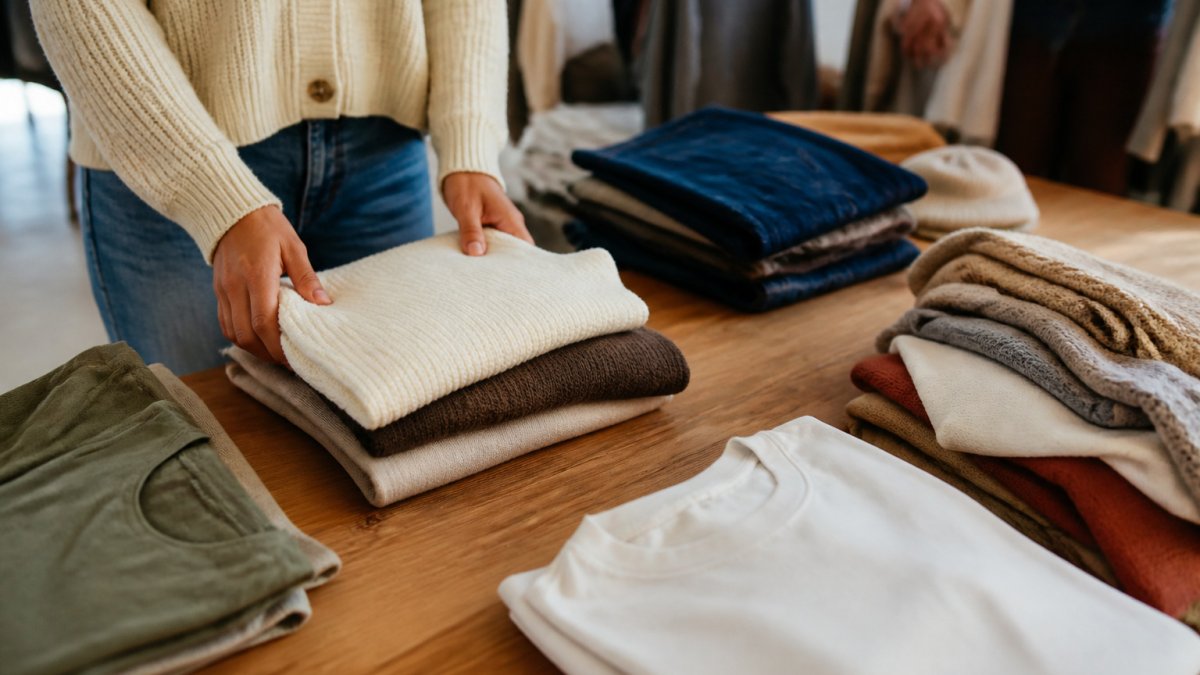
Secondhand shopping also tests your judgment: without a brand's marketing to guide you, evaluate fit, fabric, and condition yourself.
Resale and swaps work best when they replace new purchases rather than add to your total.
What Happens to Clothing After You Are Done With It
Most shoppers assume donation is the default end-of-life option, but the reality is more complicated.
Donation is not a guarantee of reuse. Charities sort donations and sell what they can; unsold items are often baled and sold to textile recyclers or exported.
Resale platforms can extend garment life, but they work best for items with resale value, recognizable brands, current styles, good condition.
Textile recycling exists but is limited. Mechanical recycling shortens fibers, so recycled content often goes into lower-grade products rather than new apparel. Chemical recycling is emerging but not yet widespread or cheap. The practical takeaway: keep garments in use longer, then choose the next-best option in this order:
- Repair and continue wearing, the highest-value option.
- Pass on to someone who will wear it, friends, family, swaps, or local buy-nothing groups.
- Resell, for items with market value.
- Donate, for items in good condition, understanding that not all donations are reused.
- Recycle, where textile recycling is available, as a last resort before disposal.
No single end-of-life option is impact-free. The goal is to slow the flow of textiles out of your closet and to choose the option that keeps the garment in use longest.
Building a Capsule Wardrobe You Will Actually Wear
A capsule wardrobe is a small set of versatile pieces that mix easily. The idea is to reduce decision fatigue and to make sure every item earns regular use.
Start by auditing what you already own. Identify pieces you reach for weekly and ones that sit unused.
Judge each addition against your existing pieces rather than in isolation.
Our advice is to build the capsule gradually.
A Step-by-Step Transition Plan
A capsule wardrobe works best as a staged process, not a single purge. Here is a practical sequence you can follow over a few months:
- Wardrobe audit (week 1). Empty your closet and sort every item into three piles: wear regularly, wear occasionally, and never wear. Note gaps, items you reach for but do not own, and duplicates.
- Shopping pause (weeks 2-4). Stop buying new clothing for a set period, typically 30 days. This breaks the habit loop and reveals what you actually miss. Use the time to repair, alter, or rewear what you have.
- Repair and refresh (weeks 3-6). Fix what is broken: replace buttons, mend seams, hem trousers, clean and store off-season items. A tailor can often extend a garment's life for a fraction of a new purchase.
- Resale and swap (weeks 4-8). Sell or swap the never-wear pile via local buy-nothing groups, consignment shops, or online resale platforms. This recovers value and keeps garments in use.
- Targeted replacement (ongoing). Fill only the gaps you identified, one or two pieces at a time, using the garment-level checklist and cost-per-wear test. Replace rather than add.
This sequence turns a vague intention into a manageable plan and reduces the risk of a rebound shopping spree.
Affordability and Access
A capsule wardrobe does not require premium prices. The goal is fewer, better-chosen pieces, not expensive ones. If budget is tight, prioritize:
- Secondhand first. Thrift and resale can supply durable basics at low cost.
- Repair over replace. A low-cost repair that extends a garment's life is often a better deal than a new purchase.
- Cost per wear. A higher-priced item worn many times can cost less per wear than a cheaper item worn only a few times. The cheaper purchase is not always the lower-cost one.
Access matters too: not everyone has nearby thrift stores or time to swap. Online resale and community swaps can help, but the core principle remains, buy less, choose carefully, and keep what you buy in use.
Measuring What Matters
You do not need a spreadsheet to see progress, but a few simple indicators help:
- Wears per item. Track how often you wear new purchases. A piece worn fewer than 10 times in a year is a signal to rethink.
- Garment lifespan. Note how long items last before repair or replacement. Longer lifespan means lower impact.
- Repair rate. Count how many items you repair versus discard. A rising repair rate suggests better care.
No purchase is impact-free. The aim is to make trade-offs visible and to improve over time, not to achieve perfection.
Your Next Step: Start With One Purchase You Will Keep for Years
Conscious consumerism works best as a series of small decisions, not a single dramatic change. Pick one upcoming purchase and run it through the checklist, the cost-per-wear test, and the question of whether it fits your existing wardrobe.
At 12:12, our premium, minimalist streetwear is built around the same principles: thoughtful design, pieces meant for everyday wear, and apparel that reflects intention.
Frequently Asked Questions
What is the difference between conscious consumerism and slow fashion?
Conscious consumerism is the broader habit of considering the environmental, social and ethical effects of every purchase. Slow fashion is one application of that habit to clothing: buying fewer pieces, choosing better-made garments and keeping them in use longer. A conscious consumer might apply the same questions to food or electronics, while slow fashion focuses specifically on wardrobes. In practice the two overlap heavily, and most people who practice one end up adopting the other.
How can I tell whether clothing is ethically made?
Start by looking for specific information rather than general claims. Ethical brands usually name the factories or regions where garments are made, publish supplier lists or audit summaries, and state how workers are paid. Third-party certifications can help, but verify them by checking the certifier's public database. Vague phrases like 'conscious collection' with no supporting detail are a warning sign, since they can be marketing without substance.
Is buying secondhand better than buying new?
Generally yes, because buying secondhand extends the life of a garment that already exists and avoids new production. The benefit depends on how you use what you buy: a thrifted item you wear once and discard offers little gain. Secondhand is strongest when it replaces a new purchase you would otherwise have made, and when the piece is durable enough to keep circulating.
Can slow fashion be affordable?
It can be, but it usually means buying less rather than spending less per item. Higher-quality garments cost more upfront, yet they can be worn many more times, which lowers the cost per wear. Secondhand shopping, clothing swaps and repair are the most budget-friendly routes. Prices for individual brands vary by quantity, style and retailer, so check current pricing directly with each seller rather than relying on estimates.
How can I make my clothes last longer?
Wash less often, use cold water and gentle cycles, and air-dry when possible, since heat and agitation cause much of the wear. Turn knitwear inside out, store clothes properly and repair small problems like loose buttons or seams before they grow. Learning basic mending is one of the most effective slow fashion habits because it keeps a favorite piece in use.
How can I build a more intentional wardrobe?
Begin by reviewing what you already own and noting which pieces you wear most often. Identify gaps in your routine rather than trends you want to chase. A capsule wardrobe of versatile, coordinated pieces can make dressing simpler. Add new items only when they fill a specific need, match your existing pieces and are made well enough to last.
What should I look for in a sustainable clothing brand?
Look for transparency about where and how garments are made, clear information about materials, and a commitment to durability rather than only a green marketing story. Check whether the brand discloses factory locations, pays attention to fabric quality, and offers repair, resale or take-back options. Compare what the brand says against what its product pages and policies actually show.
How do I start practicing slow fashion?
Begin with one habit rather than a full overhaul. Pause before each purchase and ask whether you will wear the item at least 30 times. Keep a short list of your most-worn pieces, and direct future spending toward replacing those rather than adding to a closet you rarely use. Small, consistent decisions build the habit faster than sweeping changes.