 blog
Conscious Clothing Brands for Men: A Buyer's Guide
Table of Contents
- What Makes a Conscious Clothing Brand for Men
- Sustainable Men's Clothing Brands: Materials and Production
- Ethical Men's Clothing Brands: Labor and Transparency
- Organic Men's Clothing Brands: Certifications That Matter
- Ethical Fashion Certifications: How to Verify Claims
- Price-Per-Wear and Total Cost of Ownership
- Common Mistakes When Choosing Conscious Menswear
- Frequently Asked Questions
Last Updated: October 18, 2026
What Makes a Conscious Clothing Brand for Men
A conscious clothing brand for men prioritizes ethical production, sustainable materials, and transparent supply chains. These brands prove their commitments through certifications, detailed sourcing information, and genuine investment in worker welfare.
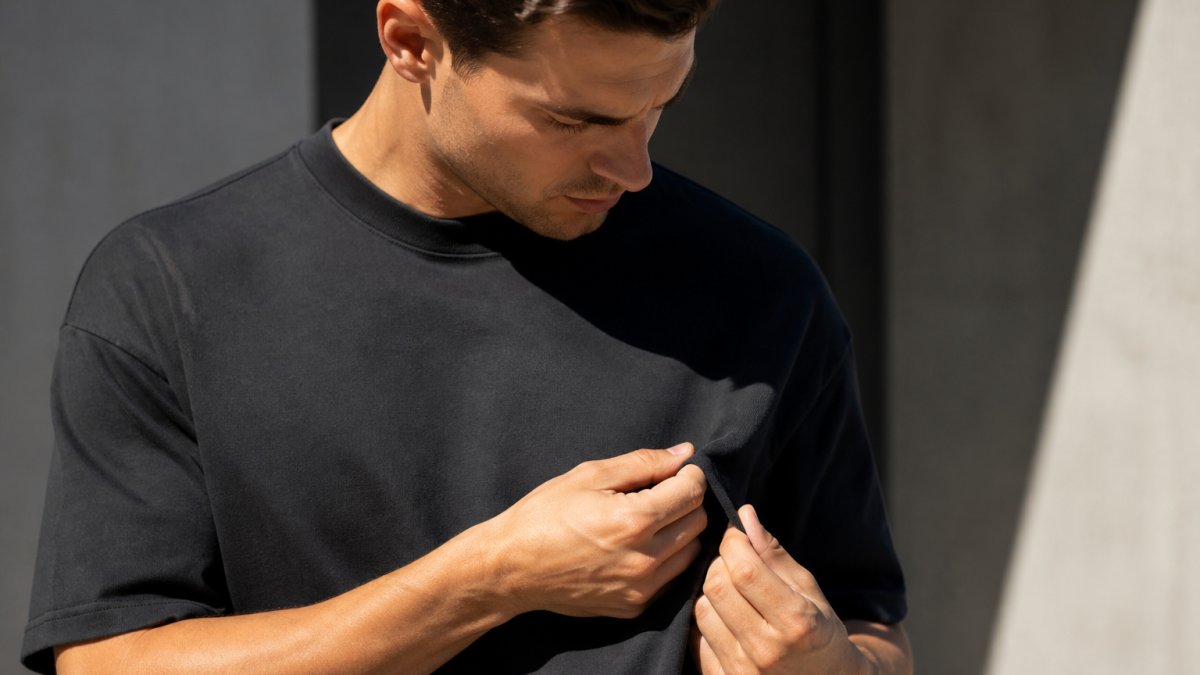
What separates conscious brands from typical retailers is accountability. Most brands talk about sustainability; conscious brands document it, sharing factory locations, material origins, and labor practices openly. Spiritually-minded consumers seeking intentional living want proof, not promises.
The best conscious clothing brands for men share core attributes: responsibly sourced materials like organic cotton, recycled fibers, or regenerative fabrics; transparent supply chains so you know where your shirt was made and by whom; quality construction that lasts years, not seasons; and fair pricing that reflects the true cost of ethical production.
Sustainable Men's Clothing Brands: Materials and Production
Sustainable menswear starts with materials. Organic cotton eliminates synthetic pesticides and uses significantly less water than conventional farming. Recycled polyester transforms plastic waste into functional fibers. Regenerative materials go further, improving soil health and carbon sequestration during growth.
Production matters equally. Sustainable brands minimize water use in dyeing, reduce chemical waste, and invest in energy-efficient manufacturing, some use natural dyes that eliminate toxic runoff, others partner with renewable-energy facilities. These choices cost more upfront but align with intentional fashion values.
Look for specificity in material claims. "We use sustainable fabrics" is vague; "our organic cotton comes from farms certified by [specific organization]" is credible. Same for production: "low-impact manufacturing" means nothing, while "our partner facilities use 40% less water through closed-loop dyeing" proves commitment.
Ethical Men's Clothing Brands: Labor and Transparency
Ethical manufacturing means fair wages, safe conditions, and respect for workers as people, not production units. Conscious clothing brands for men publish detailed supply chain information: factory names, locations, and worker welfare programs.
Look for brands that conduct independent audits. Third-party verification proves they're not hiding problems; brands with nothing to hide share audit results, worker feedback, and improvement plans.
Transparency extends to pricing breakdowns. Some conscious brands publish exactly how much of your purchase goes to materials, labor, overhead, and profit, showing workers are paid fairly and the brand isn't pocketing excess margins.
The most committed brands go beyond compliance, investing in worker development, healthcare benefits, and community initiatives in manufacturing regions. They view their supply chain as a partnership, not a transaction.
Organic Men's Clothing Brands: Certifications That Matter
Organic certification means materials meet written standards for pesticide use, chemical processing, and environmental impact, but the word "organic" on a hangtag is only as credible as the standard behind it. For menswear, a handful of certifications do most of the work, and knowing which one a brand holds tells you more than any marketing page.
The certifications you will actually encounter on men's clothing fall into three groups:
Fiber and farming standards. The Global Organic Textile Standard (GOTS) is the most rigorous widely used organic textile certification. It covers the entire processing chain, not just the farm, and includes wastewater treatment and social criteria at processing facilities. The USDA National Organic Program (NOP) governs organic fiber production in the United States, and a brand claiming "organic cotton" should be able to point to NOP or an equivalent international standard at the farm level. The Regenerative Organic Certified (ROC) program layers soil-health, animal-welfare, and social-fairness requirements on top of organic baseline rules, which is why brands using it tend to charge more.
Labor and factory standards. SA8000, administered by Social Accountability International, is a workplace standard covering fair wages, working hours, and freedom of association, verified through third-party audits (SA8000). Fair Trade USA certification applies to apparel and requires independent audit plus a community development premium paid to workers.
Chemical and environmental standards. OEKO-TEX Standard 100 tests finished textiles for harmful substances and is common on basics and loungewear. The bluesign system certifies input chemicals and production processes at the mill level.
A useful comparison habit: check whether a certification covers the product, the factory, or the brand's management system. GOTS and OEKO-TEX cover products. WRAP and SA8000 cover facilities. B Corp certification covers the whole company's social and environmental performance and is verified by B Lab, but it says nothing specific about a given shirt's fiber content.
Verification is straightforward and takes about two minutes per claim. GOTS maintains a public certified-suppliers database searchable by company name. OEKO-TEX publishes a label lookup by certificate number. B Lab maintains a public directory of certified companies. Fair Trade USA lists certified brands and products.
Ethical Fashion Certifications: How to Verify Claims
The most credible certifications in conscious menswear come from independent, third-party organizations with rigorous standards, unannounced audits, and public registries of certified brands.
Labor certifications verify fair wages, safe conditions, and worker rights; environmental certifications confirm responsible sourcing and low-impact production. Some address both at once.
Not all certifications carry equal weight. A brand might pursue certifications from organizations with minimal standards while avoiding stricter bodies. Comparing which certifications a brand holds, and which it doesn't, reveals true priorities.
Research the certifying organization itself: how rigorous are its standards, does it conduct surprise audits, how transparent is its process? A well-known, respected body carries more credibility than an obscure one.
Price-Per-Wear and Total Cost of Ownership
The most useful metric for evaluating conscious menswear is not the price tag but price-per-wear: the purchase price divided by the number of times you realistically wear the piece. A $150 shirt worn 100 times costs $1.50 per wear. A $40 shirt worn 10 times costs $4.00 per wear.
Most competitors stop at that formula. The more useful exercise is building a total cost of ownership that includes care, repair, and resale, because those three variables often decide whether a higher-priced piece actually pays off.
Start with realistic wear counts. A well-made men's button-down worn twice a week for three years is roughly 300 wears. At $120, that is about 40 cents per wear. A heavyweight tee worn once a week for two years is about 100 wears; at $45, that is 45 cents per wear.
Add care costs. Higher-quality natural fibers often need gentler handling: cold washes, line drying, and less frequent laundering all extend life but take time. Wool and merino generally need less frequent washing than cotton, which lowers both water use and fiber degradation.
Add repair and resale value. Brands that offer repair services or replacement parts change the ownership math substantially.
Account for the resale floor. Quality menswear holds residual value in a way fast fashion does not. A well-known conscious brand's overshirt or chore coat often resells on secondhand marketplaces for a meaningful fraction of its original price, which reduces net cost of ownership. A fast-fashion equivalent typically resells for very little.
Compare like with like. Price ranges vary widely across the category. Basic organic cotton tees commonly fall in the $30-$60 range; button-down shirts in the $80-$180 range; knitwear in the $120-$300 range; outerwear from roughly $200 into the several-hundred-dollar range.
Common Mistakes When Choosing Conscious Menswear
The biggest mistake is prioritizing one value over others. Organic cotton from a factory with poor labor practices isn't truly conscious, nor is an ethically-made shirt from unsustainable materials. Real conscious clothing brands balance multiple commitments.
Another common error is trusting marketing without verification. Brands spend heavily promoting sustainability claims but fewer invest equally in proving them. Read beyond the website: check third-party certifications, independent reviews, and supply chain documentation.
Sizing inconsistency plagues many conscious brands; smaller production runs and varied manufacturing partners create fit variations between batches. Order a single item first, evaluate fit and quality, then invest in more pieces.
Availability frustrates many buyers: conscious brands run limited inventory, popular sizes sell out quickly, and shipping can be slower due to smaller-scale production. Building an intentional wardrobe requires patience and planning.
Finally, don't mistake high price for high quality. Some conscious brands charge premium prices without premium construction; others offer exceptional value. Evaluate each brand on materials, construction, certifications, and reviews, not price alone.
Building a wardrobe of conscious clothing brands for men means choosing pieces that reflect your values and last for years. At 12:12, we understand that intentional fashion goes beyond aesthetics, it's about alignment with your personal growth and purpose. Our collection of premium, minimalist luxury streetwear serves as a wearable affirmation, designed for those who move with intention. When you shop for conscious menswear, look for transparent supply chains, certified materials, and genuine craftsmanship. The brands that publish detailed information about their production processes and invest in worker welfare deserve your trust. Start with one piece from a brand whose values align with yours, evaluate the fit and quality, then build from there.
Frequently Asked Questions
What makes a conscious clothing brand for men different from regular fashion brands?
Conscious brands prioritize transparent supply chains, ethical labor practices, and sustainable materials. They disclose factory locations, worker wages, and environmental impact, information most mainstream brands withhold. They also focus on durability and timeless design so pieces last years, not seasons. This reduces waste and increases value per garment.
How can I tell if a men's clothing brand is genuinely ethical or just greenwashing?
Look for third-party certifications like Fair Trade Certified, Global Organic Textile Standard (GOTS), or B Corp status. Ethical brands publish detailed sustainability reports, name their factories, and explain their supply chain. Avoid brands that use vague terms like 'eco-friendly' without backing them up. Check customer reviews and brand transparency pages, legitimate companies answer hard questions about labor and environmental impact.
Are organic men's clothes actually better for the environment?
Organic cotton eliminates synthetic pesticides and reduces water pollution, but it still requires significant water to grow. The real environmental benefit comes from durability, a well-made organic shirt worn for five years beats a cheap synthetic shirt worn once. Regenerative materials and recycled fabrics also reduce environmental impact. The best choice combines organic or recycled materials with quality construction and timeless design.
Why do conscious clothing brands cost more than fast fashion?
Ethical wages, certified materials, and quality construction all increase production costs. A conscious brand pays factory workers fairly, sources traceable materials, and uses better fabric and stitching. Fast fashion cuts corners on all three. When you calculate price-per-wear over years, conscious pieces often cost less overall, a $80 shirt worn 200 times costs 40 cents per wear, while a $20 shirt worn 20 times costs $1 per wear.