 blog
What Makes a Heavyweight Cotton Hoodie Worth Wearing Daily?
Last Updated: October 25, 2026
Quick Summary
A heavyweight cotton hoodie in the 10-14 oz/yd² range offers superior durability, warmth, and structure compared to lightweight alternatives, making it an ideal everyday piece that improves with wear and lasts 3-5 years or longer with proper care.
- Heavyweight hoodies measure 10-14 oz/yd² (340-475 GSM) versus 6-7 oz/yd² for lightweight versions, providing better insulation and durability.
- Cotton-blend compositions like 53% polyester and 42% cotton require 20-30% less careful handling than 100% cotton while maintaining comfort.
- Quality construction includes 10-12 stitches per inch seams, reinforced stress points, and ribbing that snaps back to shape after stretching.
- Machine wash cold and tumble dry low to prevent the 3-5% shrinkage that occurs with hot water or high heat drying.
- Oversized fit should add 2-4 inches to chest width and 1-2 inches to body length versus standard sizing for intentional comfort.
Table of Contents
- Why Heavyweight Cotton Hoodies Stand Out for Everyday Wear
- Understanding Heavyweight Hoodie GSM and What It Means for Warmth
- Choosing an Oversized Cotton Hoodie That Fits Your Style and Body
- Fabric Composition: Cotton Blends vs. 100% Cotton
- Heavyweight Hoodie Care and Shrinkage: How to Maintain Your Investment
- Durability and Construction Quality That Lasts
- Finding Your Perfect Heavyweight Hoodie
- Frequently Asked Questions
Why Heavyweight Cotton Hoodies Stand Out for Everyday Wear
A heavyweight cotton hoodie isn't just casual wear. It becomes part of your daily rhythm, the piece you reach for when you want comfort without compromise.
The difference comes down to durability, warmth, and how it ages. Lightweight options pill, lose shape, and feel flimsy after a few washes. Heavyweight versions hold their structure and improve with wear.
Everyday wear demands something that performs across seasons and situations. The fabric weight gives it substance and presence, qualities that matter when you're wearing apparel as a wearable affirmation. Textile research from the Smithsonian Institution shows that heavier fabrics maintain their structural integrity and color vibrancy significantly longer than lightweight alternatives.
Heavier fabric also means better insulation without bulk, a softer hand feel, and a sense of being genuinely wrapped in something protective.
Understanding Heavyweight Hoodie GSM and What It Means for Warmth
GSM stands for grams per square meter, the standard measurement for fabric weight.
Higher GSM means denser construction: more fibers packed into the same space creates better insulation, improved durability, and a premium feel.
Denser fabric traps more body heat, making a heavyweight hoodie effective across seasons: a standalone layer in cooler months, a light outer layer in warmer ones.
Fabric weight also affects how a hoodie moves with your body.
Fabric weight measured in GSM and ounces per yard determines warmth, durability, and feel.
| Hoodie Type | Weight Range | GSM Range | Best For |
|---|---|---|---|
| Lightweight | 6-7 oz/yd² | 200-240 GSM | Layering, warmer seasons |
| Heavyweight Sweet Spot | 10.2 oz/yd² | 340-475 GSM | Year-round wear, genuine warmth |
| Heavyweight Range | 10-14 oz/yd² | 340-475 GSM | Daily comfort, insulation |
Choosing an Oversized Cotton Hoodie That Fits Your Style and Body
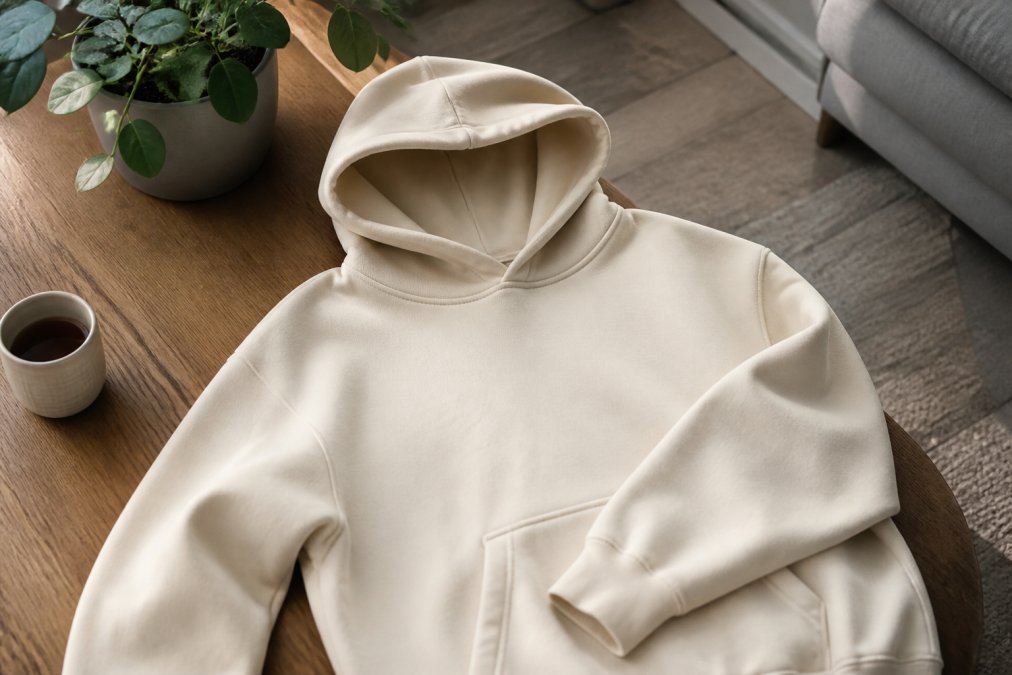
Oversized fit is standard in contemporary streetwear, but there's a real difference between intentionally oversized and simply too large. An oversized cotton hoodie should drape comfortably without swallowing your frame. Tell the difference before you buy by checking garment measurements, not just the size label.
Read the garment measurements, not the size tag
A size medium from one brand can measure like a large from another. The numbers that matter are chest width (flat, pit to pit), body length (high point of shoulder to hem), and sleeve length. For a heavyweight cotton hoodie in the 10-14 oz/yd² range, a typical men's medium runs roughly 22-24 inches across the chest, 26-28 inches in body length, and 24-26 inches in sleeve length. An intentionally oversized cut often adds 2-4 inches to chest width and 1-2 inches to body length versus standard fit.
Match the cut to your body type
- Broad shoulders or athletic build: Look for a drop-shoulder seam and a chest width at least 2 inches wider than your actual chest measurement. This keeps the shoulders from pulling and lets the fabric fall cleanly instead of bunching at the armpits.
- Narrower frames: A boxy oversized cut can overwhelm a smaller frame if the body length is too long. Favor a cropped or hip-length oversized hoodie (hem hitting at or just below the waistband of your pants) and keep the chest width within 3 inches of your actual measurement.
- Taller wearers: Check body length first. Anything under 27 inches in a medium will likely ride up when you raise your arms. Look for tall sizes or brands that publish a 28-inch-plus body length.
- Shorter wearers: A hem that hits at the hip rather than mid-thigh creates better proportions and works more seamlessly with different outfit combinations.
Sizing down vs. true-to-size
Many people find sizing down one size works better with oversized cuts: if you typically wear a medium, try a small. This prevents the hoodie from becoming too voluminous while keeping the intentional relaxed aesthetic. The Essential Oversized Boxy Fit Fleece Hoodie comes in sizes S-2XL with this principle in mind.


Check the details that affect fit
Ribbed cuffs and waistbands should sit snug without digging in; too loose lets the hoodie balloon out, too tight creates a visible cinch. The hood should stand up on its own when the drawstring is tightened, signaling heavier fabric and a well-structured opening. Check shoulder seam placement too: at or slightly past your shoulder edge reads as intentional oversized, while a seam well down the arm looks like the wrong size.
A quick fitting checklist
Try the hoodie on over a t-shirt and check four things: (1) you can raise your arms overhead without the hem lifting past your waistband, (2) the shoulder seam sits at or just past your shoulder edge, (3) the chest has room for a light layer without pulling across the back, and (4) the sleeve ends at your wrist bone or slightly below. If two or more fail, try a different size or cut.
Fabric Composition: Cotton Blends vs. 100% Cotton
This choice matters more than most people realize. 100% cotton offers breathability, natural temperature regulation, and a soft hand feel. Cotton blends, typically cotton mixed with polyester, add durability, reduce shrinkage, and often provide better color retention.
Our Why Heavy Cotton Is Better for Streetwear Silhouettes guide explores this in depth, but pure cotton requires more careful maintenance: it shrinks more readily, can pill more easily, and may fade faster without proper care.
If you're committed to 100% cotton, you're choosing authenticity and breathability at the cost of increased maintenance. Many people find this tradeoff worthwhile for the natural feel and environmental considerations. Consumer Reports' textile durability testing indicates that 100% cotton garments require 20-30% more careful handling than cotton-blend alternatives to maintain appearance and fit.
For everyday wear and spiritual apparel you'll reach for repeatedly, a thoughtful blend often makes more practical sense: the comfort of cotton with the longevity a daily-wear piece needs. Why Choose Organic Cotton Streetwear and 5 Best Natural Materials for Streetwear offer deeper dives into material selection.
777 Essential Oversized Boxy Fit Cozy Spiritual Hoodie →
Heavyweight Hoodie Care and Shrinkage: How to Maintain Your Investment
Shrinkage is the primary concern with cotton-based hoodies, especially 100% cotton.
Prevention is straightforward: machine wash cold, tumble dry low or air dry. This single practice eliminates the vast majority of shrinkage issues.
Pilling, the small fabric balls that form on the surface, happens with wear, especially in high-friction areas like underarms. It's normal and doesn't indicate poor quality.
Color fading happens gradually with any garment, but cold water washing and avoiding direct sunlight during drying significantly slows the process. These small practices extend the life of your piece substantially. The Textile Exchange's care and maintenance guidelines confirms that proper washing temperature and drying methods are the primary factors determining garment longevity.
Store your hoodie folded rather than hanging to prevent shoulder stretching; if you hang it, use a quality hanger that distributes weight evenly.
Durability and Construction Quality That Lasts
A heavyweight hoodie's longevity depends on more than fabric weight. Construction quality, seam strength, reinforcement at stress points, and finishing details separate hoodies that last from those that deteriorate quickly.
How we assess durability
- Seam type and stitch density. Count stitches per inch along the shoulder and armhole seams. A durable seam runs 10-12 stitches per inch; anything under 8 is a warning sign. Double-stitched or flat-lock seams distribute stress better than a single row of stitching.
- Stress-point reinforcement. Check for bar tacks or reinforced stitching at the pocket corners, the hood attachment, and the ends of the drawstring channel. These are the first places a hoodie fails.
- Fabric weight retention after washing. Weigh or feel the garment before and after five wash-and-dry cycles. A quality heavyweight fabric loses very little loft; a poor one mats down and feels noticeably thinner.
- Pilling and surface wear. Inspect underarms, cuffs, and the pocket area after repeated wear. Some pilling is normal, but heavy pilling within the first month signals loose fiber construction.
- Ribbing recovery. Stretch the cuffs and waistband and release. Quality ribbing snaps back to shape; cheap ribbing stays stretched.
What to look for in the seams
Look for double-stitched seams along the shoulders, armholes, and hood attachment; they handle repeated wear and washing without unraveling. Flat-lock or safety-stitched seams are even better, distributing stress across multiple threads. The kangaroo pocket should be securely attached with reinforced corners, not glued or lightly stitched. Turn the hoodie inside out: clean, finished seam allowances resist fraying, while raw or loosely overlocked edges unravel over time.
Cuffs, waistbands, and hardware
Ribbed cuffs and waistbands should be snug but not restrictive. Quality ribbing keeps its elasticity for years; cheap ribbing loses shape quickly, leaving the hoodie slouchy. Drawstrings should be substantial enough not to fray or break, and metal eyelets securely set rather than crimped loosely. These details compound: a hoodie with attention to construction feels noticeably different after a year of regular wear.
A realistic lifespan
A well-made heavyweight hoodie worn multiple times per week can last 3-5 years or longer before seams fail or the fabric thins. The biggest lifespan shorteners are high-heat drying, washing with heavy hardware like zippers and snaps, and ignoring small repairs. Replacing a drawstring or re-stitching a pocket corner early is far cheaper than replacing the garment.
Durable Minimalist Streetwear Daily Wear Review assesses how different hoodies perform across seasons of actual use. Construction quality can't be fully evaluated from photos; rely on detailed reviews from long-term wearers.
Quality construction pays dividends: a well-made heavyweight hoodie worn multiple times per week for 3-5 years or longer makes sense economically and aligns with intentional consumption practices.
Finding Your Perfect Heavyweight Hoodie
Your ideal heavyweight cotton hoodie depends on how you plan to wear it. If warmth and durability are priorities, a 10+ oz/yd² fabric weight with reinforced construction is essential.
Consider your climate: in colder regions a heavyweight hoodie is a genuine cold-weather layer; in milder areas it's a shoulder-season piece or indoor comfort garment. Match the weight to your actual usage.
Your heavyweight hoodie should feel like an extension of your daily intention practice, not just another garment.
Building an intentional wardrobe means choosing pieces that genuinely serve your life and reflect your values.
Frequently Asked Questions
What GSM should a heavyweight cotton hoodie be?
A heavyweight cotton hoodie typically ranges from 9 to 12 oz/yd² (305 to 407 GSM). This weight provides substantial warmth and durability for daily wear without being overly stiff. Anything below 8 oz/yd² is considered midweight, while 12+ oz/yd² enters ultra-heavy territory. For most people, 10-11 oz/yd² offers the ideal balance of comfort, breathability, and longevity.
How do I prevent my heavyweight hoodie from shrinking?
Wash in cold water and tumble dry on low heat, or better yet, air dry to minimize shrinkage. Avoid hot water and high heat, which cause cotton fibers to contract permanently. If your hoodie is a cotton blend (like 42% cotton with polyester), shrinkage risk is lower than 100% cotton. Always check the care tag, and consider sizing up slightly if you expect some shrinkage during the first wash.
Are heavyweight cotton hoodies comfortable for everyday wear?
Yes, heavyweight cotton hoodies are designed specifically for daily comfort. The thicker fabric provides warmth without restricting movement, and quality cotton blends offer breathability so you won't overheat. An oversized fit amplifies comfort, making the hoodie feel like a second skin rather than a constraint. Many people find them ideal for layering, casual work-from-home days, or outdoor activities year-round.
What's the difference between a cotton hoodie and a fleece hoodie?
Cotton hoodies use woven or knit cotton fabric, offering breathability and a more structured feel. Fleece hoodies use synthetic or cotton-blend fleece, which is softer and traps heat more aggressively. A cotton-blend fleece (like 53% polyester, 42% cotton) splits the difference: it's warm like fleece but breathes better and feels less plasticky. For daily comfort in variable weather, cotton or cotton-blend fleece works better than 100% synthetic fleece.